
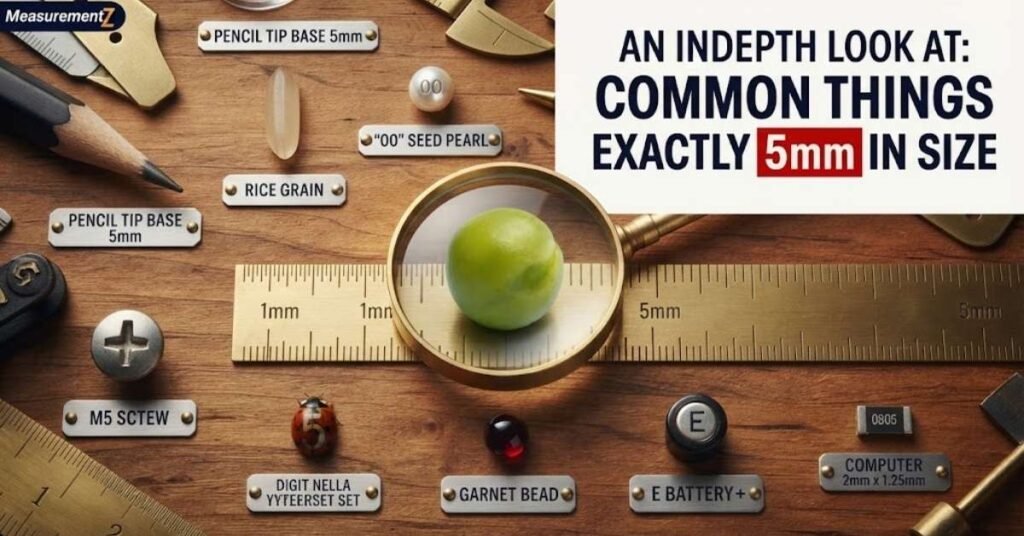

You’re staring at a product listing that says “5mm” and you have no clue what that actually looks like. Sound familiar?
Maybe you’re buying jewelry beads, ordering a replacement screw, or trying to figure out if that charging cable will even fit your device. Whatever brought you here, you want a real answer, not a math lecture.
So here it is straight up: 5mm is roughly the width of a green pea, a pencil eraser, or a small craft bead. It’s about 0.5 centimeters, or 0.197 inches if you’re working in the imperial system. Small, but not invisible. You can see it clearly, you just can’t always eyeball it with confidence.
This guide walks you through nine everyday objects that are exactly this size, plus a few tricks to estimate 5mm without touching a ruler. By the end, you’ll never second guess a millimeter measurement again.
How Big Is 5mm?
Let’s get the numbers out of the way first, because context matters here.
5mm equals 0.5 cm, 0.005 meters, and 0.197 inches. In feet, that’s about 0.016 feet, which honestly isn’t a unit anyone uses for something this tiny, but it’s good to know it exists.
Think of it this way. A standard one centimeter mark on a ruler is basically two of these lined up side by side. Half a centimeter doesn’t sound like much, and it isn’t, but it’s the kind of dimension that shows up constantly in hardware, jewelry supplies, and small product parts.
Once you start noticing 5mm items, you’ll spot them everywhere. Buttons, beads, gravel, cables. It’s a common size hiding in plain sight.
How to Estimate 5mm Without a Ruler
Not everyone carries a measurement tool around, and that’s fine. Your body and your wallet already have what you need.
These next few tricks use body reference points and stuff sitting on your desk right now. No precision instruments required, just a decent eye and a little practice.
Using Your Fingers
Your fingernail is a surprisingly good size reference. The fingernail corner, the little curved edge near your cuticle, measures close to 5mm on most adult hands.
Try this right now. Look at your pinky nail and picture cutting it into two rough sections. That smaller sliver is roughly your target dimension.
This finger measurement trick isn’t lab-accurate, but it gets you shockingly close for quick, everyday guessing.
Using Coins or Cards
Stacked credit cards offer another handy shortcut, believe it or not. A standard credit card is about 0.76mm thick, so about six or seven of them stacked together will land you near 5mm.
Coins work too. The edge thickness of a US nickel sits close to this mark, and comparing objects side by side against a coin edge gives you a fast visual reference without hunting for a ruler.
Keep a coin in your bag or on your desk. It turns into an instant measurement conversion tool whenever you need one.
Using Everyday Objects
Sometimes the fastest fix is grabbing something you already know the size of. A grain of coarse rice, a small paperclip wire, or the tip of a standard pencil all hover near 5mm.
Everyday comparison works because your brain remembers shapes better than numbers. You’ve held a pea before. You know what a button feels like between your fingers.
Lean into that memory instead of fighting it. It’s the whole idea behind this article, honestly.
Quick Comparison Table
Sometimes a table says more than three paragraphs ever could. Here’s your cheat sheet.
| Object | Approx. Size | Category |
| Green pea | 5mm diameter | Nature & Garden |
| Pencil eraser | 5mm width | Office & School |
| Craft bead | 5mm diameter | Jewelry & Fashion |
| Headphone jack opening | 5mm width | Electronics |
| Tiny button | 5mm width | Household |
| Thick cable | 5mm width | Electronics |
| Small marble | 5mm diameter | Craft & DIY |
| Watch crown | 5mm width | Watch Parts |
| Coarse gravel piece | 5mm thickness | Construction |
Bookmark this table. It’s the fastest visual size guide you’ll find for this exact measurement.
1. Green Pea Diameter
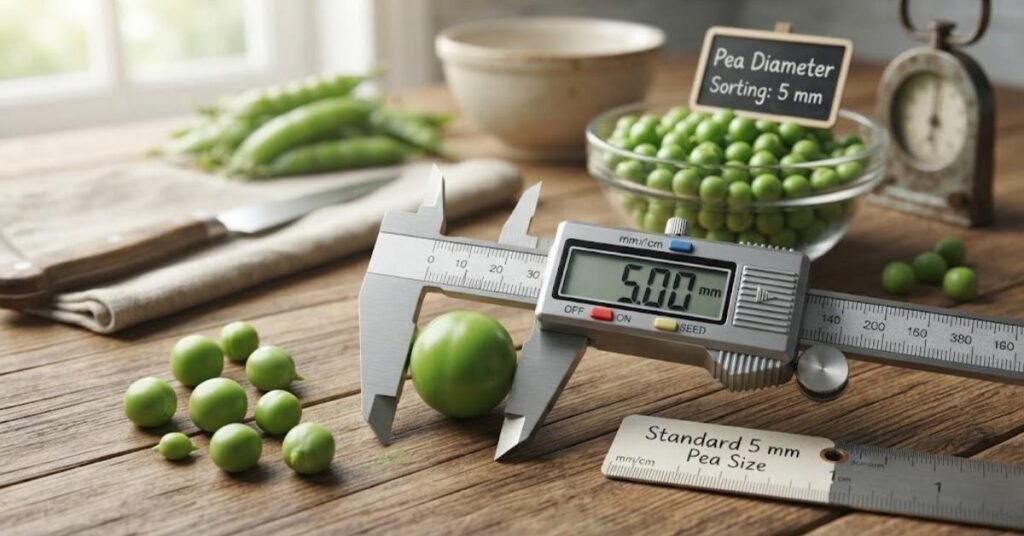
Grab a bag of frozen peas from your freezer and you’ve basically got a stack of 5mm references sitting right there. A typical green pea measures close to this diameter, give or take a hair depending on the variety.
Gardeners and grocery shoppers run into this comparison constantly. Next time you’re picking through vegetables at the store, glance at the peas and you’ll have a built-in size comparison for life.
It’s such a simple real-world example, but it sticks. You’ll never forget it once you’ve made the connection.
2. Pencil Eraser Width
That pink block sitting on the end of your pencil isn’t just for mistakes. The pencil eraser width usually clocks in right around 5mm, especially on standard school materials.
Office workers and students handle this object daily without ever thinking about its dimensions. That’s kind of the point of this whole list, showing you sizes hiding inside things you already touch.
Next time you erase a mistake, notice the width. It’s a free measurement guide built into your pencil case.
3. Small Craft Bead
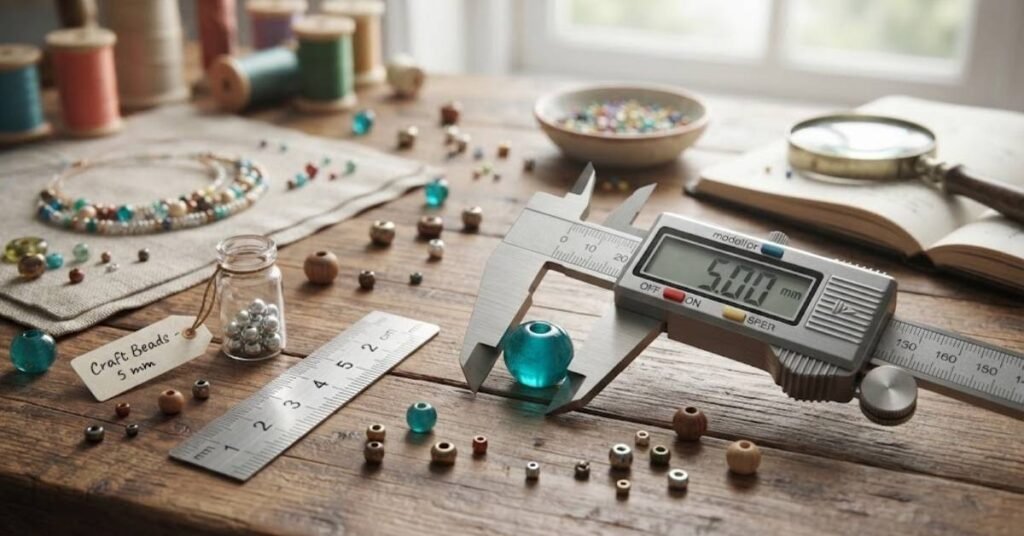
If you’ve ever browsed DIY jewelry supplies, you’ve seen bags labeled “5mm” beads. These small craft beads are wildly popular for bracelets, necklaces, and other handmade crafts.
Jewelry making hobbyists rely on this exact size because it’s small enough for delicate pieces but large enough to handle without tweezers. It’s a sweet spot in the decorative craft world.
If you’re shopping for jewelry supplies online, knowing this size reference saves you from ordering the wrong batch. Nobody wants beads too tiny to string.
4. Headphone Jack Opening
Ever wonder why some wired headphones just don’t fit certain devices? The headphone jack opening on many older ports measures close to 5mm, which matters more than people realize for device compatibility.
Audio equipment manufacturers stick to fairly standard connectors for this reason. A mismatch here means your cable won’t seat properly, and you’ll get crackly sound or nothing at all.
Understanding this size helps when you’re shopping for adapters or replacement electronic accessories. It’s a small number with a big impact on usability.
5. Tiny Button Width
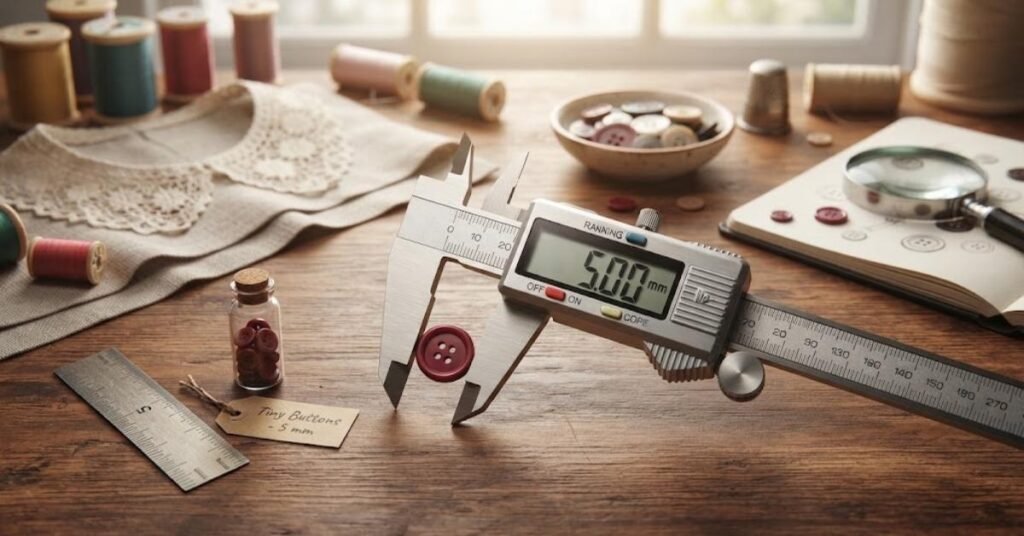
Look down at your shirt right now. There’s a decent chance one of those shirt buttons is close to 5mm wide, especially on dress shirts or fitted blouses.
Craft buttons used in doll clothing and miniature sewing projects often use this exact size too. It’s small enough to look proportionate without disappearing entirely.
If you sew or repair clothes, this common size comes up constantly. Losing a button and needing a matching replacement gets a lot easier once you know what to look for.
6. Thick Cable Width
Not all wires are created equal. A thick cable, like a heavier charging cable or an extension wire, often measures around 5mm across the outer casing.
Electronic wire thickness affects durability and how much current it can safely carry. Thinner cables fray faster, so manufacturers bump up the width for anything meant to last.
Next time you’re untangling cables behind your desk, notice which ones feel chunkier. That’s your 5mm range doing its job.
7. Small Marble Size
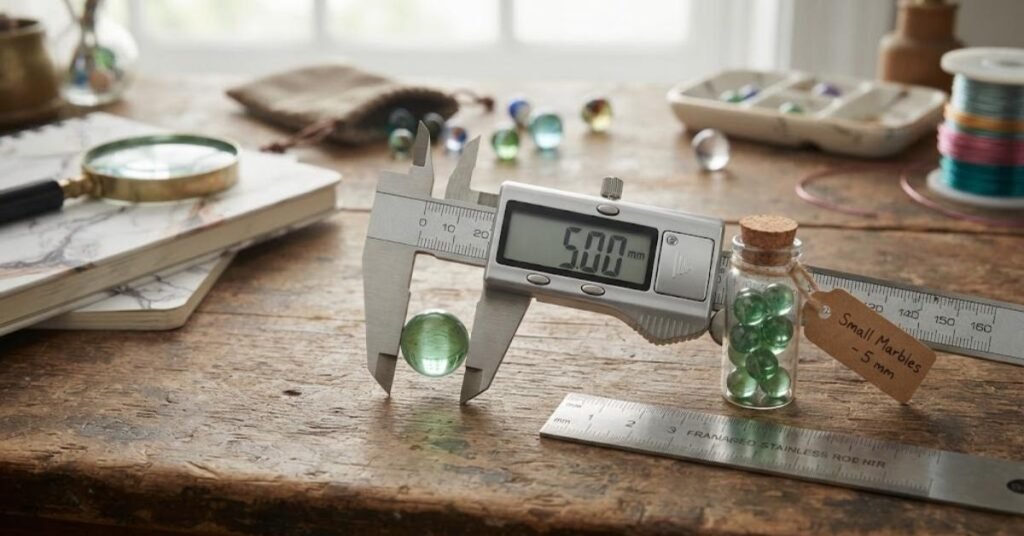
Remember playing marbles as a kid? A small marble, the tiny kind rather than the big shooters, usually sits right around this diameter.
Toy marbles in this range are popular for games, decoration, and even vase filler for home decor. They’re small enough to scatter freely but still satisfying to hold.
This is one of those familiar items that instantly clicks once you picture it. You already know exactly what a small marble feels like in your palm.
8. Watch Crown Width
Flip your wrist over and look at the little knob on the side of your watch. The watch crown, sometimes called a watch knob, typically measures close to 5mm wide on standard models.
This part handles time adjustment and date adjustment, so it needs to be grippable without looking bulky. Watchmaking brands balance function and looks constantly with parts this small.
If your watch parts ever need replacing, this measurement matters more than you’d think. A crown that’s off by even a millimeter won’t fit the casing properly.
9. Coarse Gravel Piece
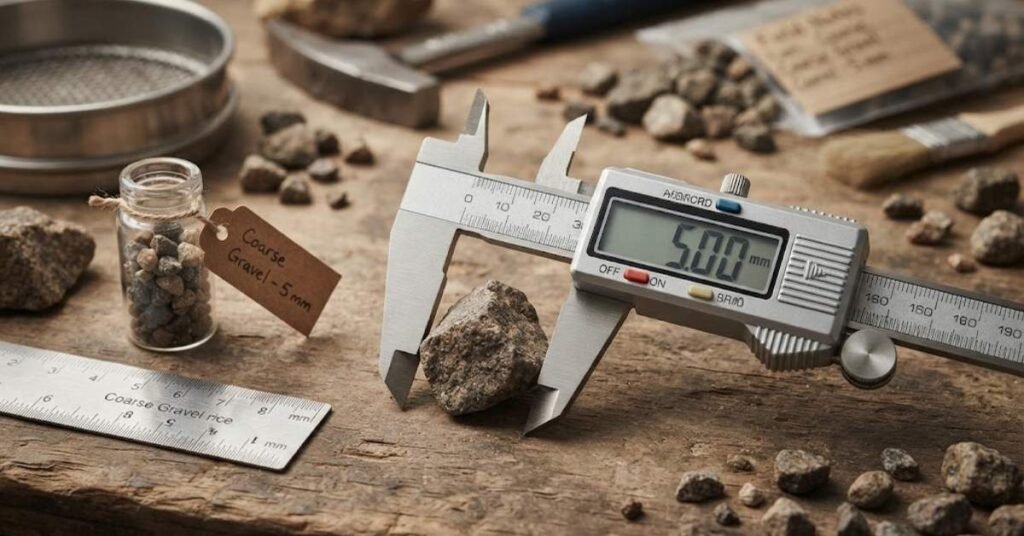
Step outside and look at your driveway or garden path. A coarse gravel piece used in landscaping often measures around 5mm across, right in that in between zone of small stone and fine sand.
Construction materials suppliers grade gravel by size for a reason. This particular range works well for drainage, pathways, and decorative ground cover without shifting too much underfoot.
Landscaping projects lean on this texture constantly. It’s a detail most homeowners never notice until they’re the ones shoveling it.
Why Millimeter Precision Matters More Than You Think
Here’s something most size guides skip entirely. Millimeter accuracy isn’t just a nerdy obsession, it genuinely changes whether a product works or not.
Think about screws and drill bits. Off by 2mm or 3mm and suddenly nothing threads together properly. Precision work in hardware and repairs depends on getting these small numbers exactly right, not roughly right.
The same goes for online shopping. Buyers browsing product sizing charts often skip past the millimeter column, then get surprised when the item arrives smaller than expected. A little attention here saves a lot of return shipping.
Converting 5mm Into Other Units You Actually Use
Not everyone thinks in millimeters, and that’s completely normal depending on where you live.
Here’s your quick conversion chart for reference:
- 5mm = 0.5 cm
- 5mm = 0.005 meters
- 5mm = 0.197 inches
- 5mm = 0.016 feet
If inches feel more natural to you, just remember this size sits just under a quarter inch. That comparison alone probably clicked faster than any decimal point could.
How 5mm Compares to Nearby Sizes
Context helps more than isolated numbers ever will. A 2mm object is noticeably thinner, closer to a pencil lead. A 3mm object still reads as delicate, like a small earring post.
Jump up to 4 inches or beyond and you’re in a completely different category of object dimensions, think small electronics or packaging rather than beads and buttons.
Keeping these nearby relative measurement points in mind helps your brain build a mental scale. Once you’ve got two or three reference sizes locked in, estimating anything in between gets much easier.
FAQs
How big is 5mm in inches?
5mm equals 0.197 inches, just shy of a quarter inch. Round it up mentally and you’re close enough for everyday purposes.
What common object is 5mm big?
A green pea, a pencil eraser, or a small craft bead are your best go to comparisons. All three are familiar items most people can picture instantly.
Is 5mm easy to see?
Yes, absolutely. It’s small, but well within normal human eyesight, no magnifying glass needed for most people.
What does 5mm look like?
Picture something roughly the width of a pea or a button. It’s noticeable and touchable, just on the smaller end of everyday object width.
How can I estimate 5mm without a ruler?
Use your fingernail corner, stack a few credit cards, or compare against a pea or bead you already have nearby. These everyday examples work in a pinch every single time.
Conclusion
5mm shows up far more often than most people realize, from jewelry beads to watch parts to gravel underfoot. Once you’ve got a handful of solid real-life examples locked into memory, guessing this size stops feeling like guesswork at all.
Next time a product listing throws a millimeter figure at you, picture a pea, an eraser, or that fingernail trick. You’ve officially got this size down.