
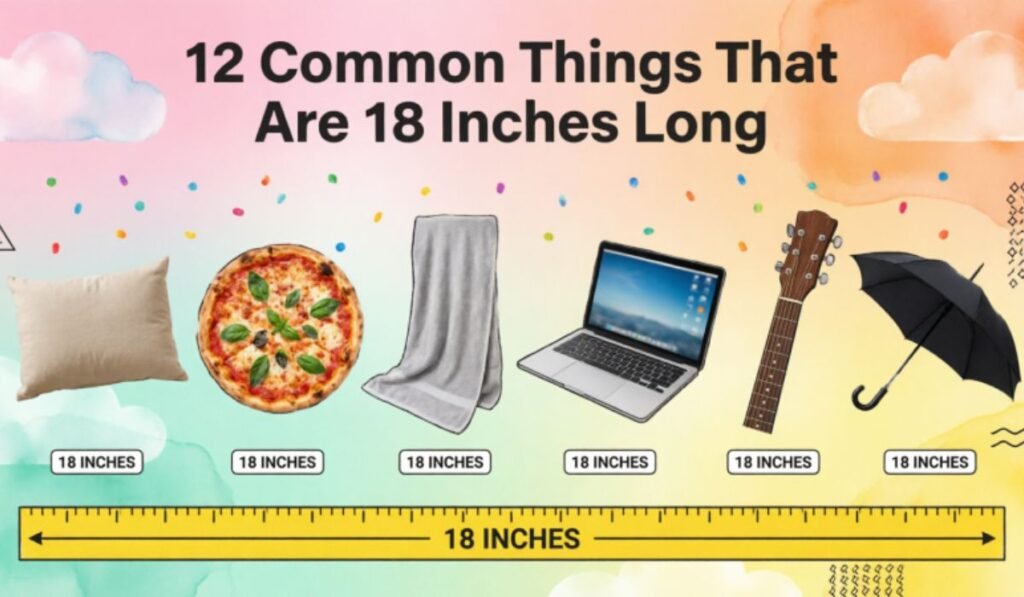

Ever stared at a product page that says 18 inches and had zero clue what that actually looks like?
You’re not alone.
Most of us can picture a foot.
We can picture two feet.
But 18 inches sits right in that awkward middle zone where guessing gets risky.
Here’s the quick answer before we go deep. 18 inches equals 1.5 feet, or 45.72 centimeters, or exactly half a yard. It’s bigger than a school ruler but shorter than two feet stacked together. Picture a throw pillow on your couch. That’s pretty much it.
Now let’s make sure that picture never leaves your brain again.
How Long Is 18 Inches, Really?
Eighteen inches is one and a half feet, no more and no less.
In the metric world, that’s 45.72 centimeters, or close to half a meter.
Think of it as half a yard, the same length fabric stores use when they cut fabric by the yard and hand you half.
It shows up everywhere. Furniture tags, shelf dimensions, shipping boxes, DIY plans, even pet gear. Once you know this number by feel, you stop second guessing every online order.
ALSO READ:https://sportnexes.com/12-inches-long/
Why Visualizing 18 Inches Is So Useful
Nobody carries a tape measure to the mall.
So when a couch cushion says 18 inches, your brain needs a shortcut, not a math problem.
That shortcut saves you money, saves you a return trip to the store, and saves you the headache of a shelf that just does not fit.
Benefits of Understanding This Measurement
Here’s what clicks once this size lives in your head.
You shop online with actual confidence instead of guessing and hoping.
You avoid ordering storage bins that look tiny in photos but are actually huge in your closet.
Your DIY projects go smoother because you already know roughly how big your materials need to be.
Common Misconception
Most people hear 18 inches and think “that’s basically two feet.”
It is not.
Two feet is 24 inches, a full six inches more, and that gap matters a lot when you’re trying to slide something into a tight cabinet or a narrow hallway.
12 Common Things That Are About 18 Inches Long
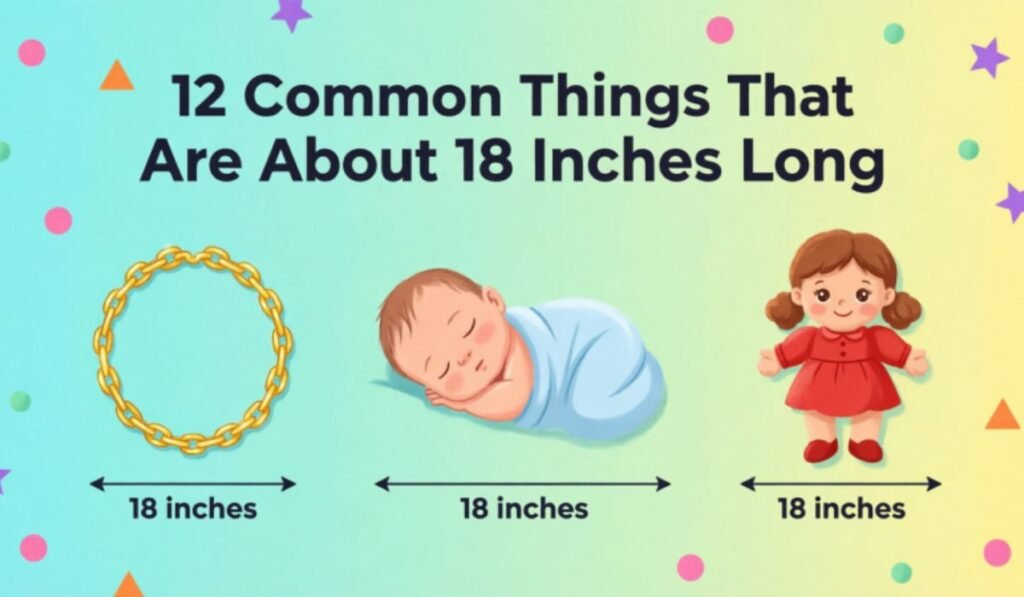
Let’s get real specific now with everyday stuff you’ve probably touched this week.
Each one below gives you a mental snapshot so the number 18 inches stops feeling abstract.
1. A Standard Carry-On Backpack Height
Most everyday backpacks, the kind you’d take to school or sling on for a flight, sit around 18 inches tall.
Next time you wear one, notice how it rests between your shoulders and hips without dragging.
That’s your visual anchor for this measurement, and it works every single time you pack for a trip.
2. Two Standard Rulers Placed End to End (Minus a Little)
A classic school ruler is 12 inches.
Now grab a second one and add just half its length next to the first.
Boom, you’ve got 18 inches, and this trick works because almost everyone has held a ruler at some point in life.
3. A Medium-Sized Throw Pillow (One Side)
Plenty of couch pillows measure 18 by 18 inches, which makes this one of the easiest reference points out there.
If you’ve ever hugged a throw pillow while binge watching a show, you already know this size by feel.
It’s soft, it’s familiar, and honestly it might be the best comparison on this whole list.
4. A Large Kitchen Cutting Board
Big cutting boards, the ones you use for chopping vegetables or carving a chicken, often run 16 to 18 inches long.
Picture your go to board for weekend cooking sessions.
That surface length is close enough to 18 inches that you can trust it as a real world benchmark.
5. A Compact Skateboard’s Wheelbase Plus Deck Overhang
Full sized skateboard decks actually run around 31 to 32 inches long, so a full deck is way longer than 18 inches.
But if you look at just the flat middle riding section between the front and back kicktails on a shorter cruiser board, that middle stretch often lands close to 18 inches.
This one takes a little more imagination, so if skateboards aren’t your thing, skip ahead to the next comparison.
6. A Guitar Neck From the Nut to the Body Joint
On many acoustic and electric guitars, the neck length from the nut down to where it meets the guitar body runs close to 18 inches, depending on the model.
If you play guitar or have a friend who does, picture holding the neck alone in your hands.
That stretch of wood is a solid, specific reference for musicians.
7. A Medium Laptop Sleeve or Case
Sleeves built for 15 to 17 inch laptops, once you add the padding and zipper edges, often measure close to 18 inches in length.
Think about sliding your laptop into its case before tossing it in your bag.
That snug fit you feel is basically our measurement in action.
8. A House Cat’s Body Length From Nose to Tail Base
An average adult house cat, measured from the tip of the nose to where the tail starts, typically falls somewhere between 15 and 20 inches depending on breed and build.
Eighteen inches sits right in the middle of that range, so a medium sized cat stretched out on your couch is a genuinely useful comparison.
Just remember it varies. A Maine Coon and a petite tabby are not going to match exactly.
9. A Shelf Depth in Many Cabinets
Kitchen cabinets, bookshelves, and closet organizers frequently use 18 inches as a standard depth.
This is huge when you’re planning storage because it tells you exactly how far back items can sit before they’re wasted space.
Next time you’re shelf shopping, check the depth spec first. It’ll usually be close to this number.
10. A Rolling Pin
Classic wooden rolling pins, the kind your grandma probably used, often measure right around 18 inches from end to end.
If you bake even occasionally, you’ve held this exact length in your hands while rolling out dough.
It’s a hands on, muscle memory kind of comparison that sticks.
11. The Width of a Small Coffee Table
Compact coffee tables and side tables, especially the ones made for smaller apartments, often measure close to 18 inches wide.
Picture the little table next to your couch where you rest your coffee mug.
That width is a genuinely practical comparison for anyone furnishing a small living room.
12. A Tablet Propped Up Diagonally
Most laptop and desktop monitors are actually much wider than 18 inches, often 20 inches or more, so a full monitor is not a great comparison here.
A better one is a large tablet, like a 12.9 inch iPad Pro, measured diagonally with a bit of bezel and a case added on.
That combined length lands right around 18 inches, which makes it a far more accurate stand in than a monitor.
How to Measure 18 Inches Without a Measuring Tool
Sometimes you just don’t have a tape measure handy, and that’s fine.
Your own body is a decent backup tool if you know a few tricks.
Simple Estimation Techniques
Use your forearm from elbow to wrist, then add a few extra inches for most adults.
Line up three adult hand widths side by side, since most hands run around 4 to 6 inches wide.
Grab any foot long object you own and mentally tack on half its length again.
Compare against something you already know by heart, like that throw pillow or backpack from earlier.
Common Mistakes People Make With 18 Inches
Even a simple number like this trips people up more than you’d expect.
Here are the slip ups worth watching for.
Mistake 1: Confusing Inches with Feet
Eighteen inches is not 18 feet, and it’s not even a full 2 feet.
This mix up sounds obvious written down, but it happens constantly when people skim product listings fast.
Mistake 2: Ignoring Depth vs Length
Shoppers often check height and completely forget to check depth or width.
Always confirm which direction the measurement is describing before you buy.
Mistake 3: Assuming “About” Means Exact
Words like approximately and around exist for a reason.
Give yourself a little wiggle room, especially with furniture and DIY materials, because real world items rarely hit a number exactly.
When 18 Inches Is a Critical Measurement
This size pops up more often than most people realize, and getting it wrong can cost you time and money.
Common Use Cases
Cabinet and shelf planning depends heavily on this exact depth.
Furniture spacing in small rooms often hinges on this number too.
Pet crates, storage bins, and shipping boxes all commonly use 18 inches as a standard spec.
DIY woodworking projects and home improvement plans reference it constantly, so double check before you cut any wood.
18 Inches Compared to Other Common Measurements
Context makes everything click faster.
Eighteen inches is bigger than a 12 inch ruler but smaller than 24 inches, which is a full 2 feet.
It’s roughly half a yard, a bit longer than most laptop widths, and noticeably shorter than a standard coffee table length.
Keep those side by side comparisons in your head and you’ll never second guess this number again.
Frequently Asked Questions About 18 Inches
Is 18 inches considered big or small?
It depends on the object. For something like a phone, it’s huge. For a room or a piece of furniture, it’s on the smaller side.
Is 18 inches the same as 1.5 feet?
Yes, exactly 1.5 feet, no rounding needed.
How can I quickly visualize 18 inches?
Picture a throw pillow, a backpack’s height, or a large cutting board.
Is 18 inches commonly used in furniture?
Very much so, especially for shelf depth and side tables.
Can I estimate 18 inches using my body?
Yes, your forearm plus a bit extra gets you close enough for most everyday needs.
Final Thoughts
Numbers only mean something once you can actually picture them in your daily life.
Now that you’ve got pillows, backpacks, cutting boards, and rolling pins locked into your memory, 18 inches stops being some random figure on a screen.
Next time you spot it on a product page or a project plan, you’ll know exactly what you’re working with, no guessing, no return boxes, no wasted trips to the store.
That’s the whole point of a good size guide. It gets out of your way and just works.