
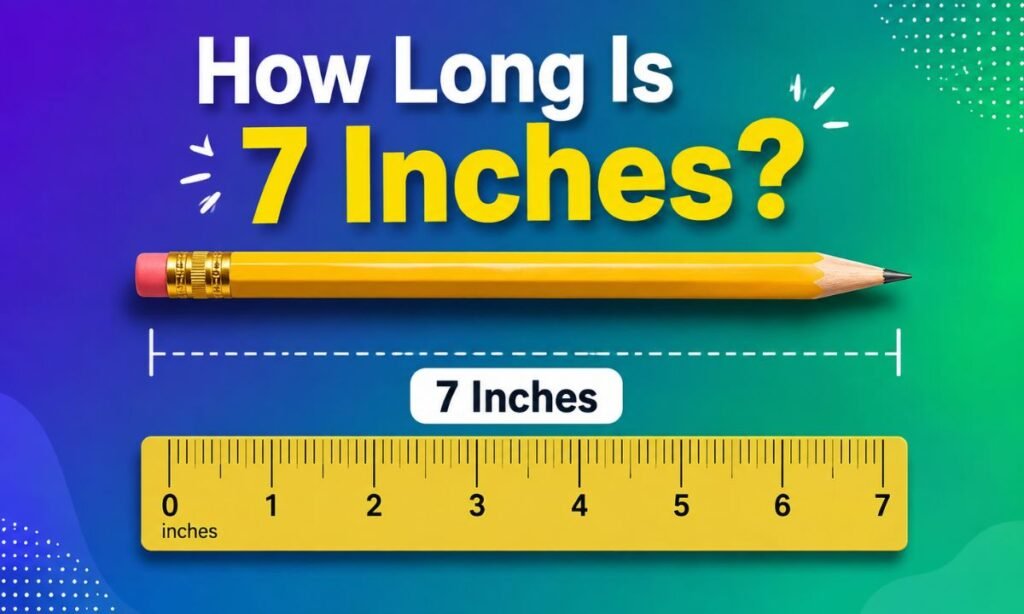

16 Common Things That Are 7 Inches Long
Ever stared at a product listing and thought, “okay but how big is that actually?”
You’re not alone. Most of us don’t carry a ruler in our back pocket, so numbers on a screen don’t mean much until we compare them to something real.
Seven inches equals 17.78 centimeters, and it’s roughly the size of a large smartphone, a TV remote, or a standard pencil. That’s the short answer. Now let’s break down exactly what that looks like in your everyday life.
How Long Is 7 Inches?
Seven inches is a medium length measurement that shows up more often than you’d think.
It’s not tiny, and it’s not huge either. Think of it as the “just right” size, big enough to notice, small enough to fit in a bag or a drawer.
You’ll find this length comparison in phones, books, kitchen tools, and even parts of your own hand.
7 Inches Conversion Chart
Numbers are easier to trust when you see them side by side.
Here’s your quick inches to cm conversion and everything else you might need:
| Unit | Converted Value |
| Feet | 0.58 ft |
| Centimeters | 17.78 cm |
| Millimeters | 177.8 mm |
| Meters | 0.178 m |
Bookmark this chart. It saves you a Google search next time you’re eyeballing a package size online.
Common Things That Are About 7 Inches Long
Sometimes a list just makes life easier.
Here are everyday 7 inch objects you probably already own or have touched today:
| Common Item | Approximate Length |
| Standard pencil | 7 inches |
| Large smartphone | 7 inches |
| TV remote control | 7 inches |
| Paperback book | 7 inches |
| Banana | 7 inches |
| Hairbrush | 7 inches |
| Small tablet screen | 7 inches |
| Notebook width | 7 inches |
| Dinner fork | 7 inches |
| Hand span | 7 inches |
| Kitchen spatula blade | 7 inches |
| Small ruler | 7 inches |
| Wallet (open) | 7 inches |
| Screwdriver shaft | 7 inches |
| Dessert plate diameter | 7 inches |
| Sunglasses (unfolded) | 7 inches |
Sixteen objects, one length. Kind of wild when you think about it.
How Big Is 7 Inches?
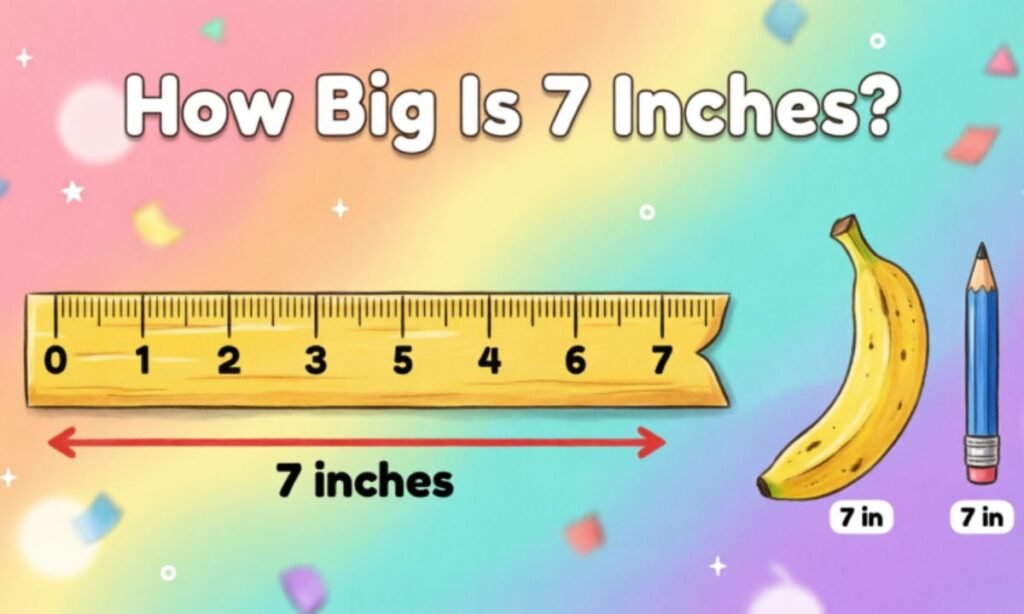
Picture holding a pencil flat across your palm. That stretch from tip to eraser is basically seven inches.
It’s long enough to feel substantial in your hand, but short enough to toss in a bag without a second thought. That’s what makes it such a practical everyday measurement.
Compare it to your phone, your favorite paperback, or even a banana from your fruit bowl, and suddenly the number “seven inches” isn’t abstract anymore. It’s just stuff you already know.
1. Standard Pencil
A brand new wooden pencil measures close to seven inches before you’ve sharpened it down.
It’s the object most people picture first when they think about this length reference, mostly because we’ve all held one since kindergarten.
Lay it flat on your desk next to anything else you’re trying to measure. Instant, free ruler.
2. Large Smartphone
Big phones today often stretch close to seven inches from top to bottom.
If you’re using a phone with a screen over 6.5 inches, you’re basically holding this measurement in your hand right now. Wild, right?
This is probably the fastest way to picture seven inches since your phone never leaves your side.
3. TV Remote Control
Grab your remote and look at it for a second.
Most large remote controls land right around seven inches, giving your fingers room to reach every button without stretching.
Next time you’re organizing a drawer or a media console, your remote is a solid stand in for this measurement.
4. Paperback Book
Flip through your bookshelf and you’ll spot plenty of paperbacks close to seven inches tall.
Publishers landed on this size because it’s easy to hold, easy to pack, and easy to read on a train or a couch.
It’s a comfy size for your hands and a handy size for measuring.
5. Banana
A medium banana usually curves out to about seven inches long.
It’s not a perfectly straight object, so it teaches you something the pencil can’t. Curved things can hit the same length as straight ones.
Next time you’re at the grocery store, glance at the bananas. You’re basically looking at a length comparison tool.
6. Hairbrush
Travel sized hairbrushes often clock in around seven inches.
Since you probably touch one every single morning, this is an easy size to keep filed away in your memory.
Toss it in your bag next to your wallet and phone, and you’ve basically got three seven inch items in one spot.
7. Small Tablet Screen
Compact tablets with seven inch screens are measured diagonally, corner to corner.
That’s an important detail because the actual device itself ends up bigger than seven inches once you count the bezels and edges.
Still, it’s a helpful reference for picturing this size in a flat, rectangular shape.
8. Notebook Width
Plenty of notebooks measure close to seven inches across the width.
It’s a size that gives you enough room to write comfortably without the notebook feeling bulky in a backpack or tote.
Lay one flat on your desk and you’ve got yourself another quick measuring stick.
9. Dinner Fork
Standard dinner forks usually run close to seven inches from tip to handle.
You use one almost every day, which makes it one of the most familiar everyday objects for this measurement.
Next family dinner, take a peek. You’ll never look at your silverware drawer the same way again.
10. Hand Span
Stretch your thumb and pinky as far apart as they’ll go.
For a lot of adults, that stretch lands somewhere close to seven inches, making your own hand a built in measuring tool.
It’s not perfectly exact since everyone’s hands are different, but it’s a handy trick when you’re in a pinch.
11. Kitchen Spatula Blade
The flat blade part of many kitchen spatulas measures around seven inches.
Cooks reach for these tools constantly, which makes the spatula a surprisingly reliable length reference in the kitchen.
Next time you’re flipping pancakes, you’re holding a mini ruler and don’t even know it.
12. Small Ruler
Some compact rulers are made at exactly seven inches so they fit in pencil cases and bags.
These are about as accurate as it gets since they’re built specifically for measuring, not just estimating.
If you’ve got one lying around, it’s your most trustworthy comparison on this whole list.
13. Wallet (Open)
Open up a men’s bifold wallet and stretch it flat.
Many land close to seven inches wide once fully open, which is something most people never actually notice until they measure it.
It’s proof that objects you carry daily can double as measurement guide tools without you realizing it.
14. Screwdriver Shaft
The metal shaft on a standard screwdriver usually falls between six and seven inches.
That length gives you enough reach for tight spaces during home repairs, without the tool feeling awkward to grip.
Next DIY project, glance at your toolbox. Seven inches is probably staring back at you.
15. Dessert Plate Diameter
Small dessert or side plates often measure close to seven inches across.
Since plates are round, this comparison helps you picture width and diameter at the same time, not just straight line length.
It’s a useful one to keep in mind when you’re shopping for dishware or planning table settings.
16. Sunglasses (Unfolded)
Open up a pair of sunglasses fully and measure from hinge to hinge.
Many pairs land close to seven inches once unfolded, giving you one more everyday object to add to your mental measuring kit.
Next time you toss your sunglasses in your bag, you’ll think about this differently.
7 Inches Compared to Everyday Objects
Let’s zoom out and put it all side by side.
Seven inches is slightly taller than most smartphones, roughly the same as a TV remote, and close to the height of a lot of paperback books.
It also lines up with a medium banana and the width of a lot of notebooks. Once you’ve got two or three of these locked in your memory, guessing length gets a whole lot easier.
How to Estimate 7 Inches Without a Ruler
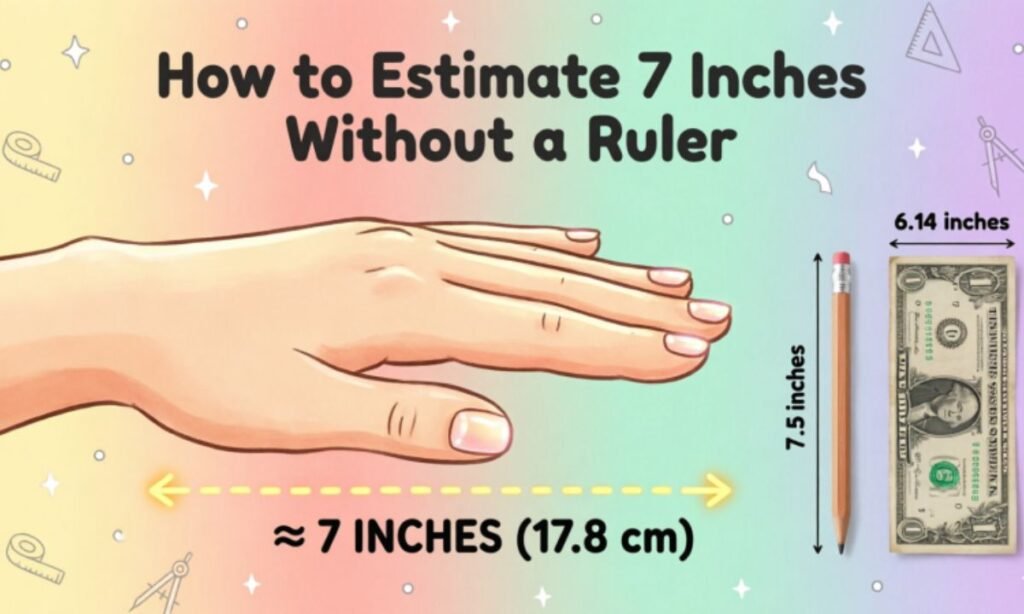
No measuring tape? No problem.
Here are quick tricks to eyeball this length comparison on the fly:
● Hold up your phone as a rough guide
● Picture a standard pencil laid flat
● Stretch your thumb and pinky apart
● Imagine a TV remote sitting in your hand
● Compare it to a medium banana
These little mental shortcuts come in handy while shopping online, packing a suitcase, or measuring a shelf without digging out a tape measure.
Common Misconceptions About 7 Inches
1. Seven Inches Is Very Small
A lot of people hear “seven inches” and picture something tiny.
In reality, it’s a medium sized measurement that shows up in electronics, tools, and furniture all the time. It’s bigger than most people assume until they actually measure something.
2. Screen Size Means Device Length
Here’s where a lot of confusion creeps in.
A seven inch screen is measured diagonally, corner to corner, not straight across. That means the actual device is almost always bigger than seven inches once you account for the frame around the screen.
3. Estimating Measurements Is Always Easy
Without a familiar object to compare against, most people guess wrong.
Studies on visual estimation show people tend to either overestimate or underestimate length when they don’t have a reference point nearby. That’s exactly why comparisons like the ones above are so useful.
Why Knowing Everyday Measurements Actually Helps You
This isn’t just trivia for the sake of trivia.
Knowing what seven inches looks like helps you shop smarter online, pack a suitcase without guessing, and plan furniture or storage without a tape measure in hand.
It’s a small skill, but it saves you real time and real returns on packages that show up way bigger or smaller than you expected.
FAQs
How long is 7 inches in centimeters?
Seven inches equals 17.78 centimeters.
What household items are 7 inches long?
Pencils, TV remotes, paperback books, bananas, and hairbrushes are common examples.
Is 7 inches a common measurement?
Yes, it shows up constantly in electronics, kitchen tools, books, and personal accessories.
Is a 7 inch screen actually 7 inches long?
No, screen size is measured diagonally, so the physical device is usually bigger than 7 inches overall.
What’s the easiest way to estimate 7 inches without a ruler?
Use your phone, a pencil, or your own hand span as a quick guide.
Conclusion
Seven inches shows up in more places than most people realize, from the pencil on your desk to the banana in your fruit bowl.
Once you’ve got a few of these everyday comparisons locked into memory, you’ll never need to squint at a ruler again. Next time you’re shopping online or measuring a shelf, you’ve already got the tools, literally, sitting around your house.
Got a favorite seven inch object we missed? Drop it in the comments and let’s keep this list growing.