
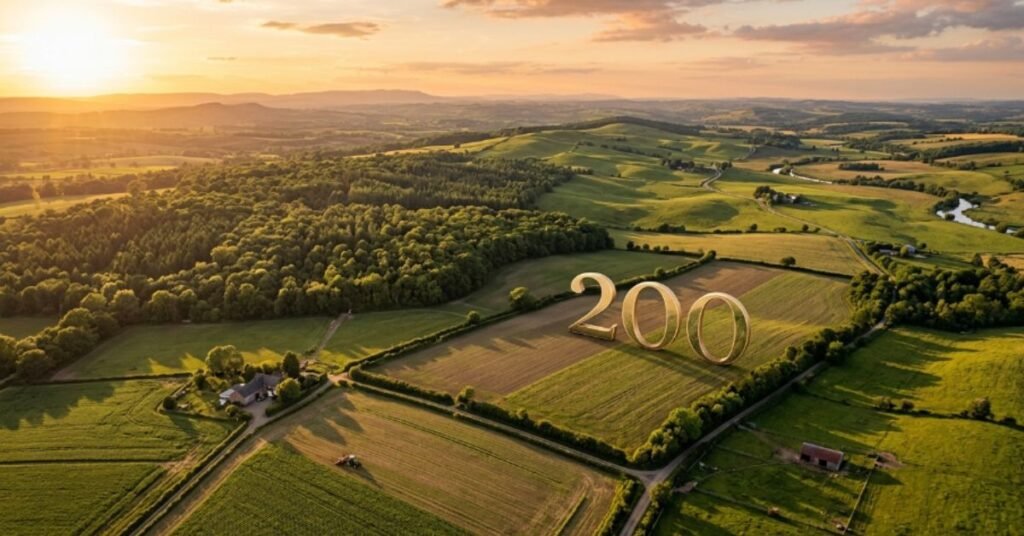

You’re staring at a listing that says 200 acres, and your brain just goes blank.
Is that huge? Is that small for a farm? Could you even walk across it in one afternoon?
You’re not alone here. Most people have never had a reason to picture land size in real terms. Numbers on a page don’t mean much until you connect them to something you’ve actually seen.
That’s exactly what this guide does. No dry math lecture, just real, visual comparisons that stick in your head long after you close this tab.
200 Acres
Let’s start simple. One acre equals 43,560 square feet. Multiply that by 200, and you get 8,712,000 square feet of raw land area.
That’s a big number, sure, but numbers alone don’t help you see anything. Think of it this way: 200 acres is roughly the footprint of 150 football fields sitting side by side. Now you’ve got a picture forming.
This kind of property size shows up more often than you’d think, in farming operations, big residential developments, even sprawling corporate campuses. Once you know what 200 acres looks like, you’ll spot it everywhere.
200 Acres into Different Units
Here’s the quick area conversion cheat sheet you’ll want to bookmark:
- Square feet: 8,712,000 sq ft
- Square miles: 0.3125 sq mi
- Square meters: roughly 809,371 sq m
- Hectares: about 80.9 hectares
- Square kilometers: approximately 0.809 sq km
The metric system numbers matter if you’re comparing international property comparisons, since most countries outside the U.S. talk in hectares and square kilometers, not acres. So if a friend in Germany asks how big your large parcel is, hectares is your answer, not acres.
How Big is 200 Acres? 8 Examples
Numbers are one thing. Pictures in your head are another. Let’s walk through eight real-world examples that’ll make 200 acres click instantly.
Example 1 – Football Fields Comparison
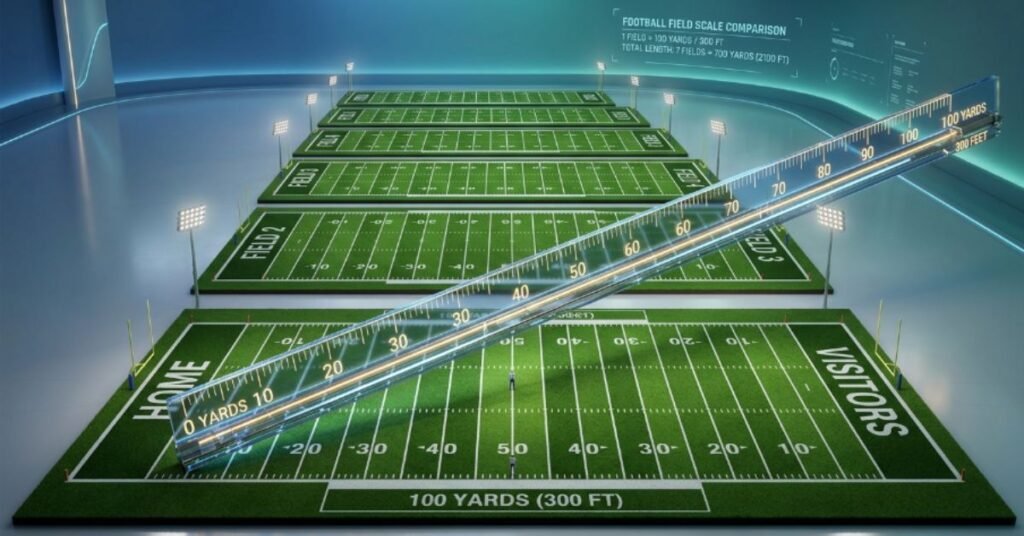
An NFL field, including both end zones, covers about 1.32 acres. Divide 200 by that, and you land on roughly 151 American football fields.
Picture Sunday afternoon, dozens of stadiums lined up end to end. That’s your 200 acres, stretched out in a straight line of gridiron turf.
This football field comparison is probably the fastest way to explain land size to someone who’s never set foot on a farm. Everybody’s seen a football field, even if only on TV.
Example 2 – Central Park Sections
Central Park in New York spans about 843 acres total. So 200 acres is roughly a quarter of the entire park.
To put that in daily terms, the Great Lawn alone is about 55 acres, and Sheep Meadow covers around 15 acres. Combine those two iconic sections with a few more, and you’re already near your 200-acre mark.
This Central Park comparison works well for city folks who’ve jogged those paths or had a picnic on the lawn. You’ve basically already walked through a chunk of your 200 acres without realizing it.
Example 3 – City Blocks

City blocks vary a lot depending on where you are. A typical Manhattan block runs about 2.5 acres, while blocks in Chicago or Detroit tend to run larger, sometimes 4 to 5 acres.
Using Manhattan’s smaller blocks, 200 acres equals roughly 80 urban city blocks. That’s a serious chunk of downtown real estate, enough to reshape a neighborhood.
If you’ve ever walked ten blocks and felt tired, imagine multiplying that by eight. That’s the kind of ground 200 acres actually covers.
Example 4 – Walmart Supercenters
A standard Walmart Supercenter, building plus parking lot, sits on roughly 20 to 25 acres of land.
Do the math, and 200 acres could hold about 8 to 10 full Walmart Supercenters, complete with all their parking, loading docks, and garden centers.
Next time you’re circling for a parking spot at your local Walmart, remember: that entire property is just one-tenth of what we’re talking about here.
Example 5 – Golf Courses
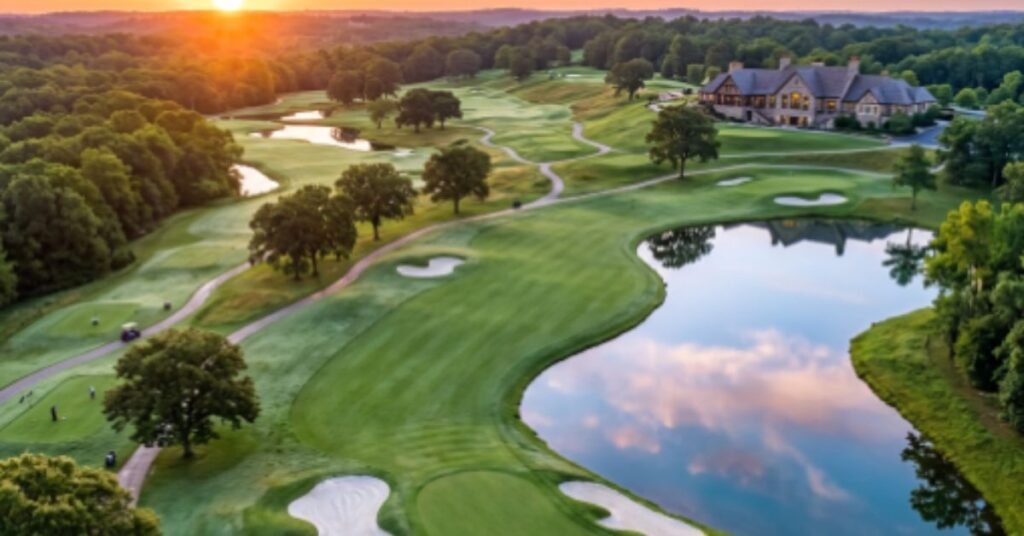
An 18-hole golf course typically needs 120 to 200 acres, depending on design. A championship golf course with wide fairways and dramatic hazards eats up more land than a compact executive golf course.
So 200 acres could realistically be an entire full-length golf course, greens, roughs, sand traps and all.
Golfers already understand this scale intuitively. Ask any regular how long it takes to play 18 holes, and you’ll get a sense of just how much ground that course covers.
Example 6 – Residential Subdivision
A modern residential subdivision with quarter-acre lot sizes could fit roughly 500 to 600 single-family homes on 200 acres, once you subtract space for streets, sidewalks, green spaces, and utility infrastructure.
Subdivision planning always eats into the raw number. Developers typically lose 20 to 30 percent of total acreage to roads and common areas before a single house gets built.
If you’ve ever driven through a big new neighborhood and wondered how many families live there, this is roughly the scale we’re describing.
Example 7 – Parking Spaces
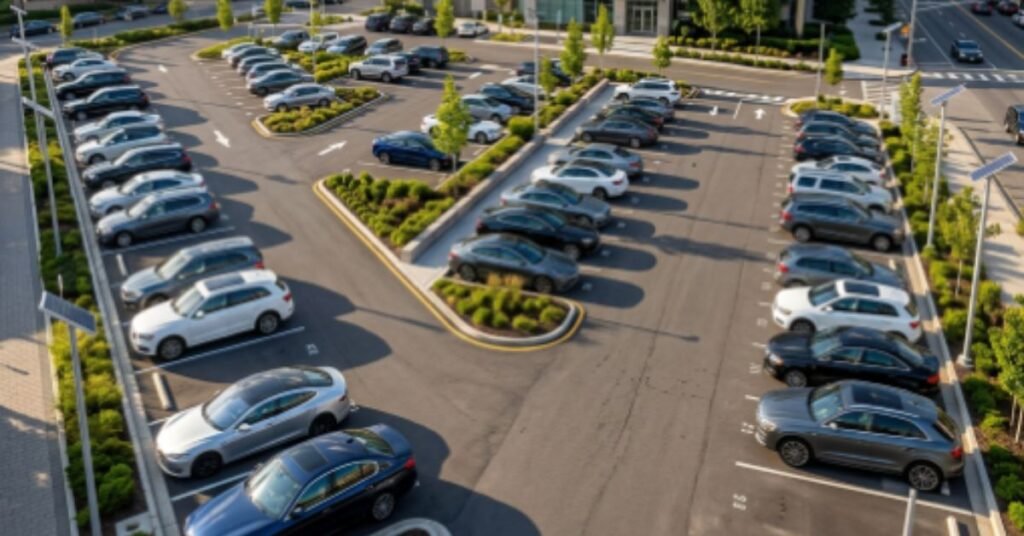
A standard parking space plus its share of drive lanes and circulation space takes up about 330 square feet.
That means 200 acres could theoretically hold around 26,000 parking spots. Think stadium parking lots or massive airport parking facilities, the kind you get lost in after a game.
Next time you’re wandering an airport lot looking for your car, you’re walking through a real-world example of just how much space 200 acres provides.
Example 8 – Agricultural Context – Farming Operations
Here’s where things get personal for a lot of readers. According to USDA data, the average farm size in the U.S. farm landscape sits around 445 acres, meaning 200 acres represents a solid medium-sized farm, not massive, but far from a hobby plot.
Corn production on 200 acres, under decent soil quality and normal climate conditions, could yield somewhere between 40,000 and 50,000 bushels depending on the season. Wheat production numbers run lower per acre but still add up fast across 200 acres.
Talk to any family farm owner, and they’ll tell you 200 acres is enough to keep a full-time operation running, tractors, harvest season chaos, and all the unpredictability that comes with crop production.
How Many Steps in a Mile?
Since we’re about to talk walking distances, here’s a quick detour that actually matters. The average adult takes around 2,000 to 2,500 steps to cover one mile, depending on stride length.
That number becomes handy once you start thinking about the perimeter of a 200-acre property, because you’ll want to know roughly how many steps you’re signing up for.
If a 200-acre parcel is laid out as a square, each side runs close to 0.56 miles. Walking the full boundary means covering just over 2.2 miles total, or somewhere around 5,000 steps.
Walking and Driving Across 200 Acres
Land looks different on paper than it does under your own two feet. Let’s get practical about actually moving across 200 acres.
How Long Does It Take to Walk 200 Acres?
At a normal walking speed of about 3 miles per hour, walking the entire perimeter of a square-shaped 200-acre property takes roughly 45 minutes.
That’s just the edge, though. Actually covering the interior, if you’re checking crops, fences, or property boundary markers, could take several hours depending on terrain.
Farmers walking fields for inspection routinely spend half a day covering ground that looks small on a map but stretches out fast once you’re in the middle of it.
Driving Time Around 200 Acres
Driving changes the math completely. At 20 miles per hour on an internal access road, circling the same square-shaped property takes roughly 7 to 8 minutes.
Most rural properties don’t have perfectly smooth roads, though, so add extra time for uneven terrain, gates, or seasonal mud. Real-world driving time often runs longer than the clean math suggests.
If you’re touring a potential land parcel purchase, budget at least 20 to 30 minutes to properly drive the full property and actually see what you’re buying.
Question’s
Let’s knock out the quick questions people search for constantly. Straight answers, no fluff.
How long is 200 acres in miles?
If shaped as a perfect square, each side of 200 acres measures about 0.56 miles, making the total perimeter roughly 2.24 miles.
How many football fields is 1 acre?
One acre equals about 0.75 of a football field including end zones, so it takes just over 1.3 acres to match one full field.
How long is 200 acres in kilometers?
Using the same square shape, each side runs about 0.9 kilometers, putting the total perimeter near 3.6 kilometers.
What is the size of 1 acre land?
One acre equals 43,560 square feet, or roughly 4,047 square meters, about the size of a standard soccer pitch minus the goal areas.
How big is an acre visually?
Picture roughly 16 tennis courts packed together, or close to one FIFA regulation soccer field without the sidelines. That’s your visual anchor for one acre.
Is 1000 square feet 1 acre?
No, not even close. An acre holds 43,560 square feet, so 1,000 square feet is barely 2.3 percent of a full acre.
How many acres is 1 km by 1 km?
A square kilometer equals about 247 acres, meaning a 1km by 1km plot is actually larger than our entire 200-acre example.
How many football pitches are 100 acres?
Using soccer pitches at roughly 1.76 acres each, 100 acres fits about 57 pitches, comfortably enough for a small sports complex.
How long is 50 acres?
A square-shaped 50-acre plot runs about 0.28 miles per side, with a total perimeter close to 1.1 miles, an easy 20-minute walk for most people.
Real Estate and Development Perspective on 200 Acres
From a buyer’s chair, 200 acres sits in a strange middle ground. Too big for a backyard project, but not massive enough for large-scale commercial property development without serious planning.
Land developers often look at parcels this size for residential development projects or mixed-use plans that blend homes with small commercial strips. Land valuation on 200 acres depends heavily on location, zoning, and nearby infrastructure access.
Buildable land versus unusable terrain matters too. Wetlands, steep slopes, or protected zones can shrink your actual usable footprint well below the full 200 acres on paper.
Environmental and Land Use Considerations
Not every acre serves the same purpose, and that’s worth thinking through before buying or developing 200 acres of anything.
Open space preservation has become a bigger conversation in urban planning circles lately, with cities pushing to protect rural land from unchecked sprawl. Land utilization decisions on a 200-acre parcel can ripple out to affect local wildlife corridors and water drainage patterns.
Land capacity studies often factor in soil quality, slope, and existing vegetation before greenlighting any development land proposal. Skipping this step is how projects end up stuck in permitting hell for years.
Final Thoughts
So, how big is 200 acres, really? It’s 151 football fields. It’s a quarter of Central Park. It’s eight Walmart Supercenters stacked together. It’s a solid, working family farm.
Land size only makes sense once you connect it to something familiar, and that’s the whole point of every comparison above.
Whether you’re eyeing a land parcel for a farm, sizing up a residential subdivision, or just settling an argument with a buddy about how big your family’s old property really was, you’ve now got the real numbers and the real pictures to back it up.
Got a property size you’re trying to wrap your head around? Drop it in the comments, and let’s break it down together.