
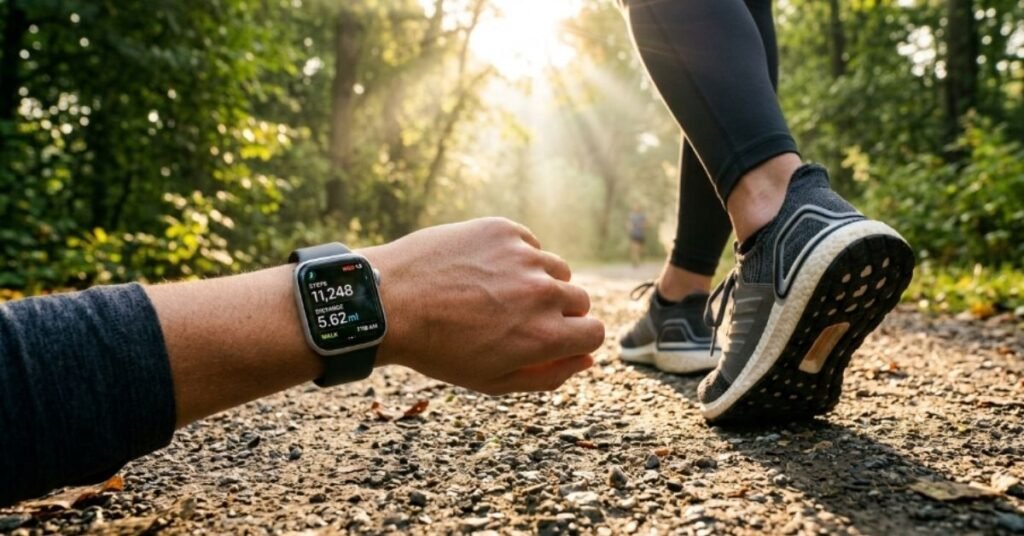

So you hit 6,000 steps on your tracker today. But what does that actually mean in real distance? Here’s the short answer. 6,000 steps works out to roughly 2.5 to 3.2 miles, depending on whether you walked, jogged, or ran it. That’s about 4 to 5.1 kilometers. The exact number shifts based on your stride, your pace, and even your height.
Stick around, because we’re breaking down every version of this answer below. Walking pace, jogging pace, running pace, all of it. Plus the health perks, the calorie burn, and a full FAQ section for the questions everyone keeps typing into Google.
How Many Miles is 6,000 Steps for Different Activities?
Not all steps are created equal. A slow evening stroll covers less ground than a jog, even at the same step count. That’s the part most step tracker apps don’t explain clearly.
Your stride length is the real variable here. Walk casually and your steps shrink a bit. Break into a jog or a run, and your average stride length stretches out, which means you cover more distance per step.
Here’s the quick breakdown before we go deeper into each one:
- Walking 6K steps: around 2.5 miles (4 km)
- Jogging 6K steps: around 3 miles (4.8 km)
- Running 6K steps: around 3.6 miles (5.8 km)
Walking 6K Steps
At a moderate pace, most adults land around 2.2 to 2.5 feet per stride. Multiply that by 6,000 steps and you get somewhere close to 2.5 miles. Walk it at a brisk walking pace instead, and your stride opens up slightly, pushing you closer to 2.7 or 2.8 miles.
Time-wise, expect this to take 50 to 60 minutes for a casual walk. A faster, brisk walking pace can shave that down to 45 to 50 minutes. It’s an easy number to hit on a lunch break walk or a slow evening stroll around the block.
Jogging 6K Steps
Jogging opens your stride up a fair bit more than walking does. Most joggers average 2.8 to 3.2 feet per step, which puts 6,000 steps at roughly 3 to 3.2 miles. That’s a solid jump in distance covered for the exact same step count.
Time-wise, a steady jogging pace covers this in about 35 to 45 minutes. It’s a nice middle ground if walking feels too slow but full-on running feels like too much. Plenty of runners use jogging as their warmup before pushing into a faster pace anyway.
Running 6K Steps

Now we’re talking bigger strides and higher intensity. A runner’s stride can stretch to 3.5 feet or more, especially with longer strides and more explosive movement off each foot. That pushes 6,000 steps up to 3.6 miles, sometimes touching 4 miles for taller runners with a fast running pace.
Time for this one drops way down to 25 to 35 minutes, depending on speed. Height matters here more than in walking, since taller individuals naturally cover more ground per stride. Terrain plays a role too, and we’ll get into that shortly.
Distance Comparison for 6,000 Steps (miles)
Let’s line these up side by side so the picture is crystal clear. The gap between walking and running isn’t small. It’s over a full mile of difference for the same 6,000 steps.
- Casual walk: 2.5 miles
- Brisk walking: 2.7 to 2.8 miles
- Jogging: 3 to 3.2 miles
- Running: 3.6 to 4 miles
Same step count, wildly different distance. That’s why comparing your steps to a friend’s steps rarely tells the full story.
Quick Comparison Table
Here’s everything in one place, because sometimes a table just says it better.
| Activity | Distance (Miles) | Distance (KM) | Time Taken |
| Walking (casual) | 2.5 miles | 4 km | 50–60 min |
| Walking (brisk) | 2.84 miles | 4.8 km | 45–50 min |
| Jogging | 3.2 miles | 5 km | 35–45 min |
| Running | 3.6 miles | 5.8 km | 25–35 min |
| Fast running | 4 miles | 6.5 km | 20–25 min |
Walking 6K Steps
Quick recap on this one before we move on. Walking distance for 6,000 steps sits between 2.5 and 2.84 miles for most adults. Your exact number depends on stride length, and stride length depends on you.
Jogging 6K Steps
Jogging distance lands around 3 to 3.2 miles for the same step count. It’s the sweet spot between low effort and real cardiovascular exercise. A lot of people don’t realize how much extra ground jogging covers versus walking.
Running 6K Steps
Running distance tops the list at 3.6 to 4 miles. Speed and efficiency both go up, but so does the strain on your joints. Worth keeping in mind if you’re new to running and jumping straight from walking.
How Many Kilometers Is 6,000 Steps?
If miles aren’t your thing, here’s the metric version. Walking 6,000 steps comes out to about 4 to 4.8 kilometers. Jogging the same steps lands near 5 kilometers, and running pushes it up to 5.8 to 6.5 kilometers.
Some very fast runners with long strides can even stretch that toward 8.2 kilometers, though that’s on the higher end. Most step tracker apps let you switch between units in the settings, so you don’t have to do this math yourself every day. But now you know roughly what to expect either way.
Factors That Affect Your 6K Steps Distance
Nobody’s stride is identical, and that’s exactly why “6,000 steps equals X miles” isn’t one fixed number. Several things quietly change the math behind the scenes.
Height plays the biggest role. Taller individuals naturally take longer steps, which means more distance per 1,000 steps than someone shorter. It’s simple body mechanics, nothing complicated about it.
Gender factors in too, mostly tied to average height differences between men and women. Terrain matters as well. Uphill walking or uneven surfaces shorten your natural stride compared to smooth pavement or a flat track.
Your walking speed and overall fitness level shift things too. A faster pace usually means slightly longer strides, up to a point. And body weight can subtly affect stride mechanics, especially over longer walking duration.
Formula
Want to calculate your own number instead of relying on averages? Here’s the simple math behind every distance calculator out there.
Distance = (Steps × Stride Length) ÷ 5,280 feet
That 5,280 feet figure is just the number of feet in a mile, so don’t overthink it. Measure your own step length (walk 10 steps, measure the total distance, divide by 10), plug it into this conversion formula, and you’ll get a far more accurate number than any generic chart. It only takes a minute, and it beats guessing.
Health Benefits of Walking 6000 Steps Daily
Here’s where this stops being just a math problem. Northwestern Medicine research followed over 20,000 participants for six years, and the results were hard to ignore. Adults who hit 6,000 to 9,000 steps daily showed a 40–50% lower risk of cardiovascular disease, including heart attacks and stroke.
That’s not a small number. It means a daily walking habit built around this step count genuinely protects your heart health over time, not just your waistline. Consistency beats intensity here, and 6,000 steps is realistic enough that most people can actually stick with it.
Beyond the heart, walking this much daily supports weight management through a steady calorie deficit, especially when paired with healthy eating. It also boosts mental health, thanks to a rise in endorphins and a drop in stress hormones. Better sleep quality, steadier energy levels, and improved blood pressure and circulation all tend to follow naturally.
What Your Fitness Tracker Might Be Getting Wrong
Here’s something most articles skip entirely. Devices like Fitbit estimate your distance tracking using a preset stride length based on your height and gender, not your actual stride. If you never entered your real personal profile details, your numbers could be off by a noticeable margin.
Go into your activity tracker settings and update your height and stride manually if the app allows it. It’s a five minute fix that makes every future distance tracking reading far more accurate. Small detail, but it changes the whole picture.
Is 6,000 Steps a Realistic Daily Goal?
The old “10,000 steps” number gets thrown around constantly, but where did it even come from? It actually traces back to a 1960s Japanese marketing campaign for a pedometer, not any real scientific study. Ironic, considering how much pressure people put on themselves to hit it.
6,000 to 9,000 steps is backed by actual research showing real health improvements, which honestly makes it a more realistic goal for most beginners and older adults. It’s beginner-friendly, sustainable, and still delivers serious results. Chasing a daily goal you can actually keep long term beats chasing a round number that sounds impressive but burns you out in a month.
FAQ’s About Miles Is 6K Steps?
How many miles is 6,000 steps on Fitbit?
Fitbit typically estimates 2.5 to 2.84 miles for 6,000 steps, based on your entered height and gender. Update your stride length manually for a more precise reading.
How many kilometers is 6,000 steps?
Roughly 4 to 4.8 kilometers for walking, closer to 5 to 5.8 kilometers for jogging or running.
Does 6,000 steps include running?
Yes, most step tracker apps count steps regardless of activity type. The distance just varies based on your pace and stride length.
Can beginners walk 6,000 steps daily?
Absolutely, and it’s actually one of the best beginner-friendly targets out there. Start slower if needed and build up over a few weeks.
How many calories does 6,000 steps burn?
Most people burn around 200 to 350 calories walking 6,000 steps, depending on weight, pace, and terrain. Jogging or running the same steps burns noticeably more.
How long does it take to walk 6,000 steps?
Around 50 to 60 minutes at a casual walk pace, or 45 to 50 minutes if you pick up to brisk walking.
How many miles are in 6K steps?
Between 2.5 and 4 miles, depending entirely on whether you walked, jogged, or ran it.
Can you lose weight by walking 6000 steps a day?
Yes, when combined with a sensible calorie deficit and healthy eating. Over time, this kind of sustainable weight loss can add up to 1–2 pounds a week for many people.
How long of a walk is 6K steps?
At a moderate pace, that’s about 50 minutes of walking, roughly 2.5 miles.
Is 6k steps a day considered active?
Research suggests yes. 6,000 to 9,000 steps daily is linked to meaningful cardiovascular risk reduction, which puts it well above a sedentary lifestyle.
Conclusion
6,000 steps isn’t just a random number on your screen. It’s roughly 2.5 to 4 miles, or 4 to 6.5 kilometers, depending on your pace and stride length. More importantly, it’s a genuinely realistic goal backed by real research on heart health and cardiovascular disease prevention.
Whether you’re walking it slow, jogging it steady, or running it fast, the distance changes but the benefit doesn’t disappear. Track your own step length, use the formula above if you want exact numbers, and focus on consistency over perfection. That’s really the whole game here.