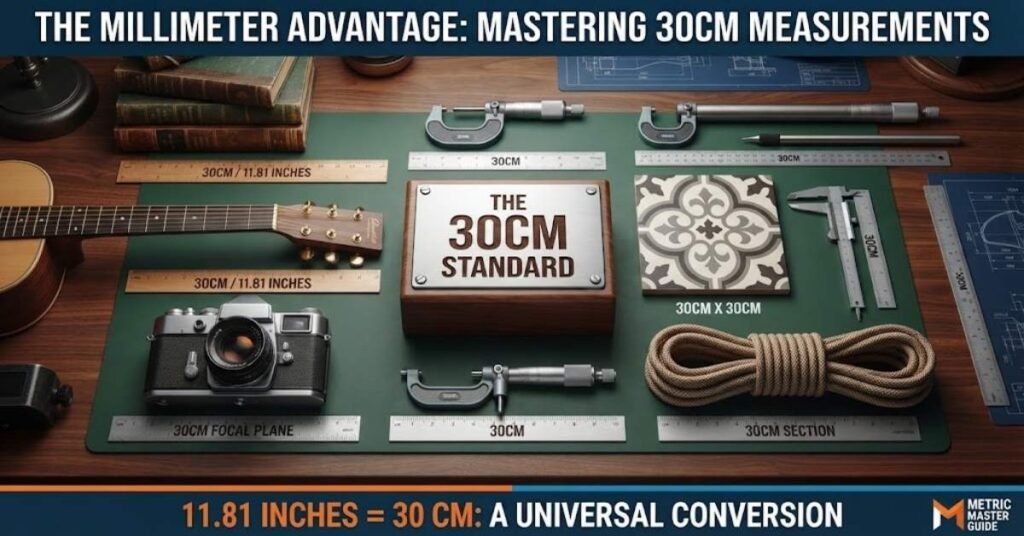

30 cm equals 11.81 inches. That’s the short answer. If you came here just for the number, there it is. But sticking around for two more minutes will save you from ever having to Google this again, because you’ll actually feel how long 30 cm is, not just know the digits.
Most conversion pages give you a number and nothing else. You leave still confused about whether 30 cm is “big” or “small” for whatever you’re measuring, a shipping box, a plant pot, a tile. This guide fixes that. You’ll get the math, sure, but you’ll also get 12 everyday objects that are roughly this length, so the next time you’re eyeballing something without a ruler, you’ll already know.
30 cm: Every Conversion You Actually Need
Let’s get every unit out of the way first, because 30 centimeters shows up in a few different systems depending on where you live and what you’re shopping for.
- 30 cm in inches: 11.81 inches
- 30 cm in feet: 0.984 feet (basically one foot, just a hair short)
- 30 cm in meters: 0.3 meters (m)
- 30 cm in millimeters: 300 millimeters (mm)
- 30 cm in yards: roughly 0.328 yards (yd)
Notice that 0.984 feet number. It’s almost 12 inches, which is exactly why people mix up 30 cm with a full foot. It’s close, but not quite. If precision matters, like when you’re cutting shelving or ordering picture frames for fixed slots, that tiny gap can throw off your fit. Round numbers are convenient, but they’re not always accurate, and this is one of those cases where the difference actually counts.
If you’re working in pixels instead of physical length, the math shifts again. At 72 DPI, 30 cm converts to about 850 pixels. At 96 DPI, it’s closer to 1134 pixels. At 300 DPI (the standard for print), you’re looking at roughly 3543 pixels. This matters more than people expect when you’re designing something that needs to print at a specific size rather than just look right on a screen.
Why 30 cm Keeps Showing Up Everywhere
Here’s something nobody tells you: 30 cm isn’t a random number. It’s one of the most common dimensions in manufacturing, especially in countries that use the metric system. Europe, Asia, and most of the rest of the world build things around clean metric measurements, so 30 cm pops up constantly in product listings, size charts, and standard dimensions for furniture, tiles, and packaging.
Compare that to countries running on the imperial system, where a foot (12 inches) is the natural benchmark. Since 30 cm and 12 inches are so close, manufacturers shipping globally often round one to match the other. That’s why you’ll see a “12 inch” pizza box that’s actually cut to fit a 30 cm pizza, or a “1 foot” shelf that’s really 30 cm under the hood. It’s not sloppy engineering. It’s practical overlap between two metric standards that were never designed to match perfectly.
12 Everyday Things That Are Right Around 30 cm
Numbers on a screen don’t mean much until you connect them to something you’ve actually touched. So here are 12 real-life size reference points, ordinary objects that hover right around 30 cm, to help this measurement finally click.
1. A Medium Pizza
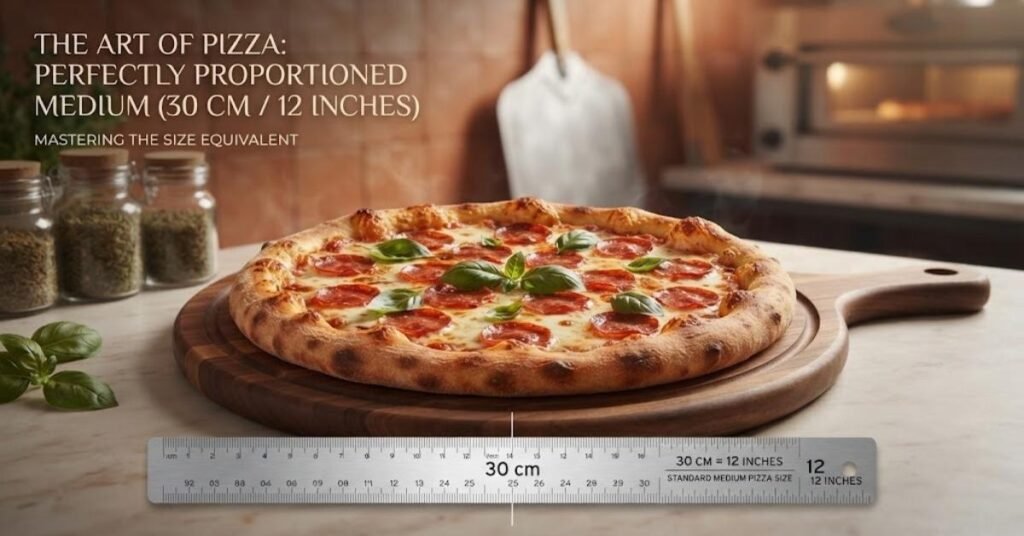
A medium pizza typically runs about 30 cm across, give or take a couple centimeters depending on the shop. Next time a pizza box lands on your counter, that’s your built-in size comparison tool. The pizza diameter on most medium menu options lines up almost exactly with what we’re talking about here.
Think about how a medium pie looks sitting on your oven rack before it’s sliced. That full circle, edge to edge, is close enough to 30 cm that you can use it as a mental ruler for anything else you’re trying to size up in the kitchen.
2. A Standard Plant Pot (Medium Size)
Walk into any garden center and you’ll spot plant pots labeled by their top opening width. A common 30 cm diameter plant pot is a popular middle-ground size, big enough for a maturing monstera or a small citrus tree, but not so massive it swallows your windowsill.
These pots strike a balance gardeners love. Too small, and roots get cramped fast. Too large, and you’re wasting soil and space. A 30 cm planter tends to be the sweet spot recommended for houseplants that have outgrown their starter pots but aren’t ready for anything dramatic.
3. A Vinyl Record (LP)
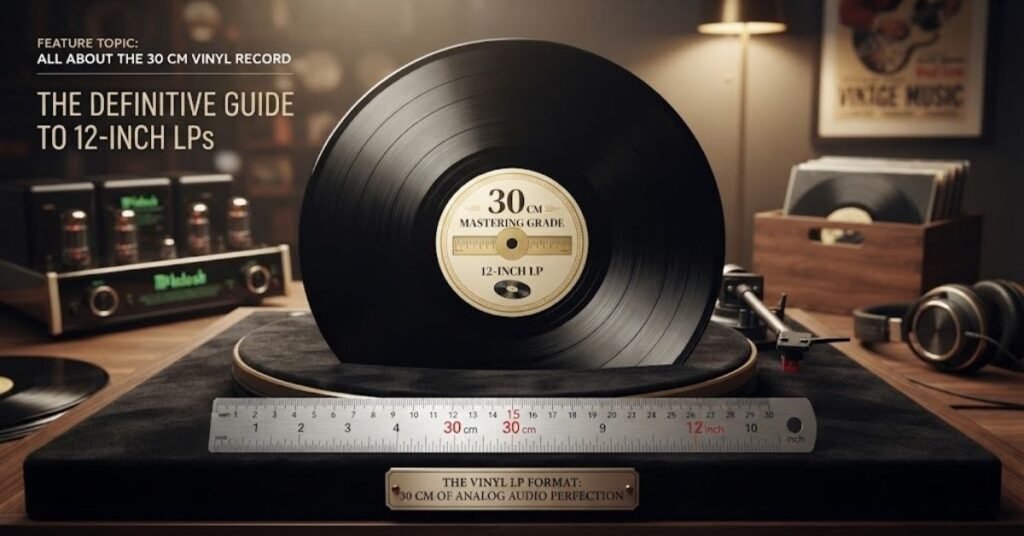
Here’s a fun one. A classic 12-inch record, the standard LP record format, measures almost exactly 30 cm across. That paper label in the middle, the grooves spiraling outward, the whole disc, it’s a near-perfect physical match for our number.
If you or someone you know collects music records, you already own a built-in measuring tool. Pull one out of its sleeve and you’re holding 30 cm in your hands, no measuring tape required.
4. A Round Side Table
Plenty of compact round side table designs, the kind you’d tuck beside a sofa or use as a bedside table, land right around 30 cm in diameter. Brands like IKEA sell several small furniture pieces in this exact range because it’s roomy enough for a lamp or a coffee mug without eating up floor space.
If you’ve ever shopped for furniture dimensions online and wondered what “30 cm” would actually look like in your living room, picture that tabletop. It’s small, functional, and surprisingly common in household items built for tight spaces.
5. A Guitar Neck (Full Length from Nut to Body)
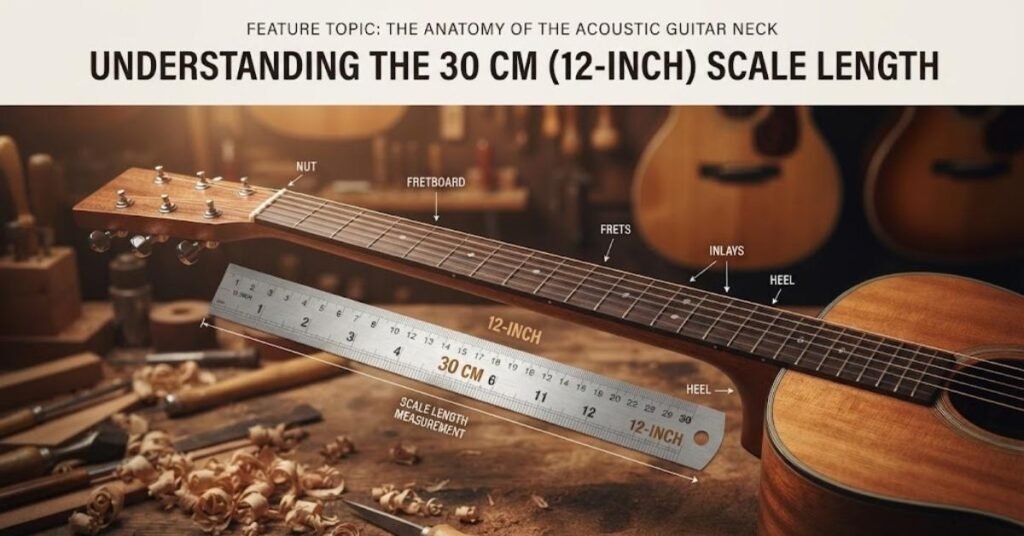
Musicians, this one’s for you. The guitar neck, measured from the nut near the headstock down to where it meets the guitar body, is often close to 30 cm on both acoustic guitar and electric guitar models, though it varies by scale length and manufacturer.
If you play, run your hand down the neck next time you pick up your instrument. That stretch from nut to body gives you a physical, muscle-memory sense of the length we’re discussing, which honestly sticks better than any number on a page.
6. A Standard Floor Tile
In construction and home renovation, a 30 × 30 cm tile is one of the most widely used sizes for bathroom tiles, kitchen tiles, and entryway flooring. Ask any tiler and they’ll tell you this dimension is practically an industry default.
An interior designer planning a small bathroom or hallway will often reach for this size specifically because it tiles evenly across standard room widths with minimal cutting. It’s efficient, it’s predictable, and it’s everywhere in the construction materials aisle.
7. A Newborn Baby’s Length at Birth (Roughly Half)
Here’s a softer comparison. An average newborn baby‘s birth length is around 50 cm, so 30 cm is roughly six-tenths of that, or think of it as measuring from the top of a newborn’s head down to about their ribcage. It’s not a precise medical marker, just a gentle, relatable way to picture the scale.
Parents who’ve measured their baby’s length at the hospital have an intuitive sense of these small numbers. If you’ve been through it, you know how tiny (and how long, somehow, at the same time) a newborn feels. This comparison just borrows that memory.
8. A Standard PVC Pipe Section (Common Cut Length)
In plumbing and irrigation work, a PVC pipe section cut to roughly 30 cm is an extremely common length for pipe fittings, especially in DIY projects around the house. Whether it’s part of a drainage system or an irrigation system for the garden, this cut length shows up constantly on hardware store shelves.
If you’ve ever stood in the plumbing aisle holding a pipe wondering “is this long enough,” 30 cm is often the benchmark contractors reach for when a job needs a mid-length connector piece rather than a full-length pipe.
9. A Typical Skateboard Deck Width (Times Two)
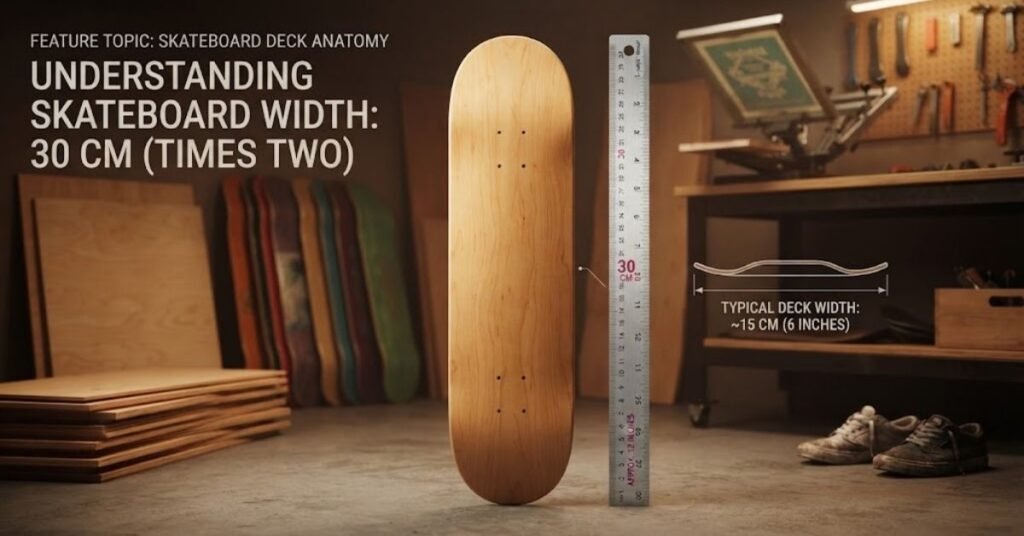
A skateboard deck typically measures about 20 cm wide, so doubling that gets you close to 30 cm territory when you’re picturing deck width alongside a bit of extra clearance space. Riders shopping for boards pay close attention to width because it directly affects stability and turning control.
Skate shops often display decks side by side so buyers can compare object comparison in person before choosing. If you’ve ever stood in front of that wall of boards, you’ve already done informal size comparison work without realizing it.
10. A Large Dinner Candle Holder (Plate Style)
A decorative tray style dinner candle holder, the flat, plate-shaped kind used as a table centerpiece, often runs close to 30 cm across for larger designs. These show up a lot in home décor stores around the holidays when tablescaping becomes a whole event.
If you’ve set a dining table for guests and reached for the biggest candle plate in the cabinet, there’s a decent chance it was hovering right around this size, wide enough to anchor a centerpiece without overwhelming the table.
11. A Standard Badminton Racket Handle
The badminton racket handle and shaft combined often measure close to 30 cm, which matters a lot to players fine-tuning their racket grip. This measurement is especially relevant in regions like South Asia and Southeast Asia, where badminton is practically a national pastime.
If you’ve played casually or competitively, you’ve held this length in your hand more times than you can count. It’s another one of those measurements your body already understands, even if your brain never put a number to it.
12. A Standard Bathroom Faucet Spout Reach
Last one. A bathroom faucet spout on a typical vanity setup often reaches around 30 cm from the base of the faucet assembly to the tip, especially on wider basin designs. This is a common spec people check before a home improvement project, because a spout that’s too short leaves you splashing water everywhere.
Next time you’re at a hardware store comparing bathroom fixtures, glance at the spout reach listed on the box. There’s a solid chance the numbers hovering near 30 cm are the ones that’ll actually fit your kitchen counter or bathroom vanity comfortably.
30 cm in Inches and Feet: Quick Math Reference
Sometimes you just want the numbers, no stories attached. Here’s your quick math reference for converting 30 cm across the units people ask about most.
| Unit | Value |
| Inches | 11.81 inches |
| Feet | 0.984 feet |
| Meters | 0.3 meters |
| Millimeters | 300 mm |
| Yards | 0.328 yd |
The formula behind the inch-to-centimeter conversion is simple: multiply inches by 2.54 to get centimeters. Flip it around for centimeter-to-inch conversion, divide centimeters by 2.54. So 30 divided by 2.54 gives you 11.81 inches, confirmed. Keep that formula in your back pocket and you’ll never need a measurement conversion app again.
30cm Diameter: What That Actually Means
When a product listing says “30cm diameter,” it’s describing a circle, and that single number tells you more than you might think. The diameter is the straight line across the widest part of a round object. From that one figure, you can work out the radius (half the diameter, so 15 cm), the circumference (diameter times pi, roughly 94.2 cm), and even the area in square centimeters (about 706.5 sq cm).
This matters a lot when you’re shopping for round objects like a plant pot, a dinner plate, or even a car tire. Product dimensions listed as “diameter” versus “radius” trip people up constantly, and ordering the wrong one means your item either doesn’t fit the space or looks comically small once it arrives. Always double check which measurement a listing is actually using before you hit buy.
Is 30 cm the Same as 12 Inches?
Not quite, and this trips up more shoppers than you’d expect. 30 cm equals 11.81 inches, while 12 inches equals 30.48 cm. That’s a 0.48 cm gap, small on paper, but enough to matter when you’re doing precision cuts for a shelf or fitting something into a container with a tight lid.
For casual estimating, calling 30 cm “about a foot” is fine. But if you’re a DIY projects kind of person cutting shelving to exact fixed slots, or a manufacturer working within tight tolerances, that half centimeter can be the difference between a clean fit and a frustrating redo.
How to Estimate 30 cm Without a Ruler
Don’t have a measuring tape handy? Your own body is a surprisingly reliable backup tool for estimation without ruler situations.
- The distance from an average adult’s elbow to wrist is close to 25 to 27 cm
- Adding a bit past the wrist toward the knuckles gets you near 30 cm
- A sheet of A4 paper is 29.7 cm long, essentially 30 cm
- Your forearm, elbow to fingertip for many adults, lands close to this range too
- Two adult hand widths side by side often approximate 30 cm as well
These tricks won’t replace actual precision measurement, but for quick, everyday guessing, when you’re arranging storage, checking if something fits on a shelf, or eyeballing a shipping box before you tape it shut, they’ll get you remarkably close.
Where 30 cm Shows Up in Online Shopping
Anyone who’s spent time browsing online shopping platforms has run into this number without realizing its significance. Product listings for bags, display shelving units, and bathroom accessories frequently list 30 cm as a key dimension, and understanding it saves you from returns.
Search behavior backs this up too. A quick Google search for almost any product category and “30 cm” turns up thousands of listings, because it sits right in that useful middle ground: not too small to be useless, not too large to be impractical. Sellers know this, which is why so many product sizing charts default to it as a benchmark option across garden supplies, hardware store inventory, and general household measurement categories.
Why This Number Matters More Than You’d Think
It’s easy to dismiss a single measurement as trivial, but 30 cm sits at an oddly useful crossroads between systems. It’s the connective tissue between metric system countries and imperial system countries, close enough to a foot that conversions rarely cause major headaches, yet precise enough in centimeters to satisfy engineering and construction standards.
Whether you’re a student running through homework conversions, a shopper trying to picture product dimensions before checkout, or someone halfway through a home improvement project measuring shelving without a tape nearby, this number keeps resurfacing because it’s genuinely practical. It’s not flashy, but it’s dependable, and dependable measurements are exactly what people search for when they’re trying to get something right the first time.
FAQs
What is 30 cm in inches exactly?
30 cm equals 11.81 inches. For quick mental math, round it to roughly 11.8 inches.
Is 30 cm bigger or smaller than a foot?
Slightly smaller. A foot is 30.48 cm, so 30 cm falls just short by about half a centimeter.
How many millimeters are in 30 cm?
There are 300 millimeters (mm) in 30 cm, since each centimeter equals 10 mm.
What everyday object is closest to 30 cm?
A sheet of A4 paper, at 29.7 cm long, is about as close to an exact match as you’ll find.
How do I convert 30 cm to pixels for design work?
It depends on your DPI. At 96 DPI it’s about 1134 pixels, at 300 DPI it’s roughly 3543 pixels, so always check your project’s resolution setting first.
Why do pizza boxes and shelving often round 30 cm to 12 inches?
Because the two numbers are so close that manufacturers shipping across both metric and imperial markets round for convenience rather than listing separate standard sizes for each region.