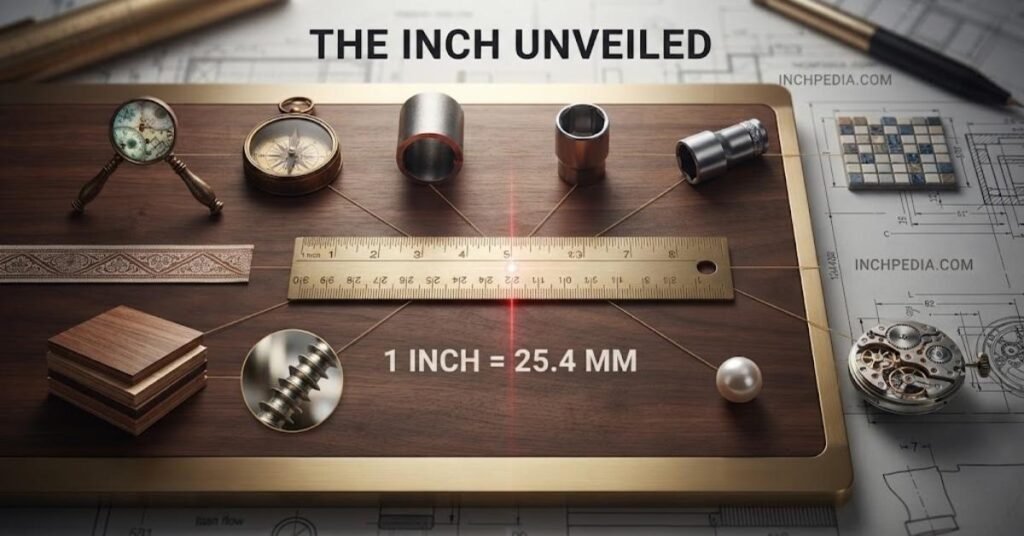

You’ve heard the measurement a hundred times. But can you actually picture 1 inch without grabbing a tape measure?
Most people can’t. Numbers on a ruler don’t mean much until you connect them to something real.
That’s what this guide does. No dry conversion chart talk, just objects you already own or see every day, each one close to 1 inch in size.
1 Inch, Converted Every Way
Let’s get the numbers out of the way first, so you’re not doing math later.
One inch equals 2.54 centimeters, or 25.4 millimeters if you want it in smaller units. In feet, it’s 1/12, and in yards, it’s a tiny 1/36 slice.
On screens, things get a bit trickier because pixels depend on DPI. At 72 DPI, 1 inch is 72 pixels. At 96 DPI, it jumps to 96 pixels, and at 300 DPI (the standard for print), it’s a sharp 300 pixels packed into that same inch.
Here’s a quick conversion chart you can bookmark:
- 1 inch = 2.54 cm
- 1 inch = 25.4 mm
- 1 inch = 0.083 feet
- 1 inch = 0.0278 yards
- 1 inch = 0.0254 meters
- 1 inch = 72 pixels (72 DPI)
- 1 inch = 96 pixels (96 DPI)
- 1 inch = 300 pixels (300 DPI)
16 Everyday Things That Land Right Around 1 Inch
Numbers are fine, but your brain remembers pictures better. So here’s the good part, real household objects you can hold, measure, or picture without leaving your couch.
Each one below sits close to 1 inch in some direction, whether that’s width, thickness, diameter, or height. Grab a few of these and check them against a ruler if you want proof.
Hockey Puck (Top to Bottom)
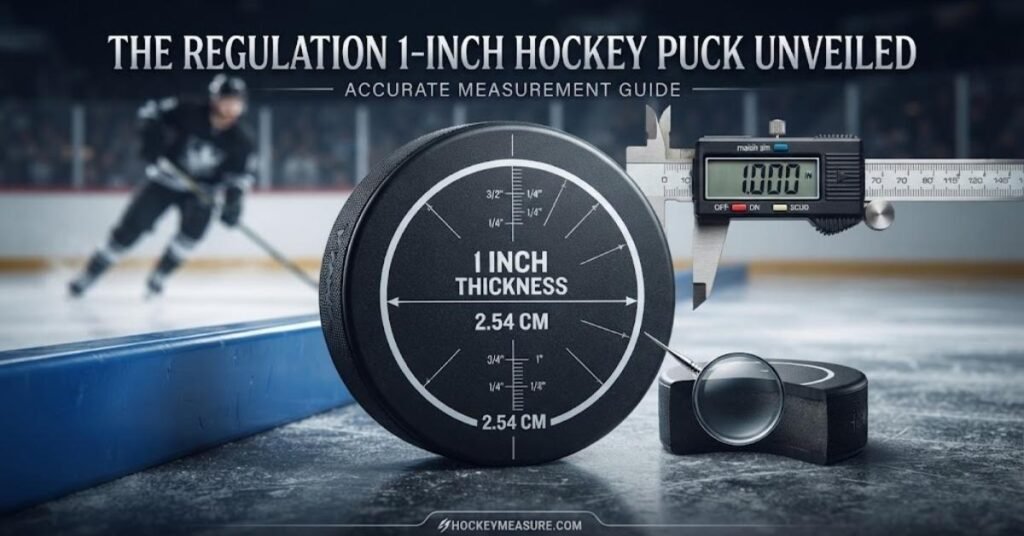
A regulation hockey puck stands exactly 1 inch tall from top to bottom. That’s not a rough guess either, it’s written into the official rulebook.
The puck is made of vulcanized rubber, frozen before games to keep it from bouncing too much on the ice. That frozen hockey puck trick is a real practice, not a myth.
If you’ve ever held one, you already know the size by feel. It’s compact, heavy for its size, and a perfect stand-in whenever you need a 1-inch reference in a pinch.
A Stack of Pennies
Here’s a fun one you can actually build at your kitchen table. A single US penny is about 1.52 millimeters thick, so stack roughly 16 or 17 of them and you’ll hit close to 1 inch.
This trick works because coin stack measurements are consistent. The US Mint keeps penny dimensions tight, so your stack won’t be far off no matter which pennies you grab from your change jar.
Some machinists even use a coin stack as a rough feeler gauge when the real tool isn’t handy. It’s not precise engineering, but it’s a solid backup measurement in a pinch.
Standard Wine Cork
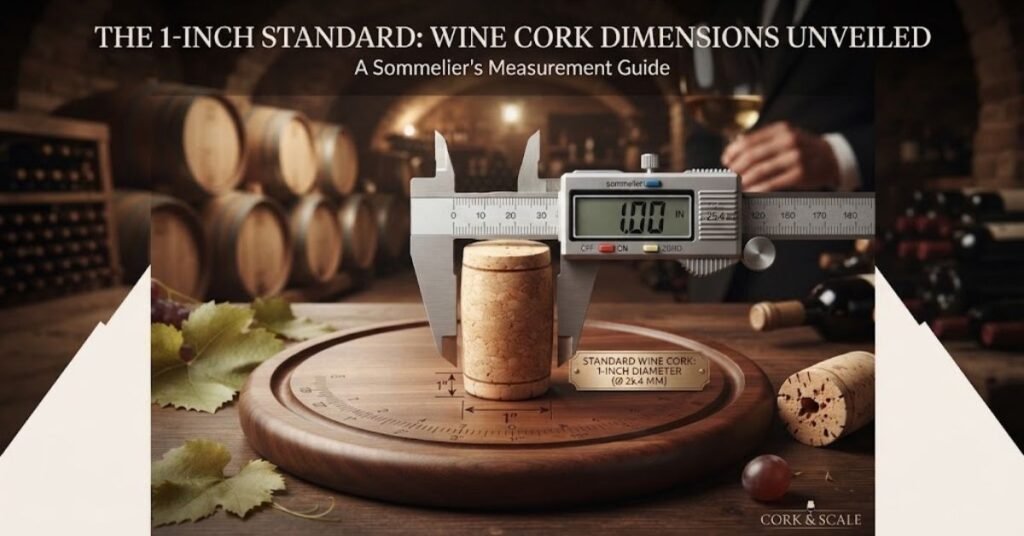
A standard wine cork, often called a #9 cork in the industry, measures close to 24 millimeters across, just under 1 inch in diameter.
That size isn’t random. Corks need to fit snugly into a bottle neck without letting air sneak in, so cork diameter is one of the most standardized measurements in the wine world.
Next time you open a bottle, take a second look at the cork before you toss it. It’s one of the easiest size comparison tools already sitting in your recycling bin.
US Dollar Coin
The US dollar coin, sometimes called the golden dollar coin, measures 26.5 millimeters across. That’s a touch over 1 inch, close enough to use as a mental anchor.
Compare it to a quarter coin, which measures smaller at 24.26 millimeters. Lining up a quarter coin next to a dollar coin actually helps you feel the difference in coin diameter more clearly than reading numbers ever will.
Keep a dollar coin in your desk drawer if you like quick visual checks. It beats hunting for a measuring tool every time you need a rough estimate.
Forever Stamp
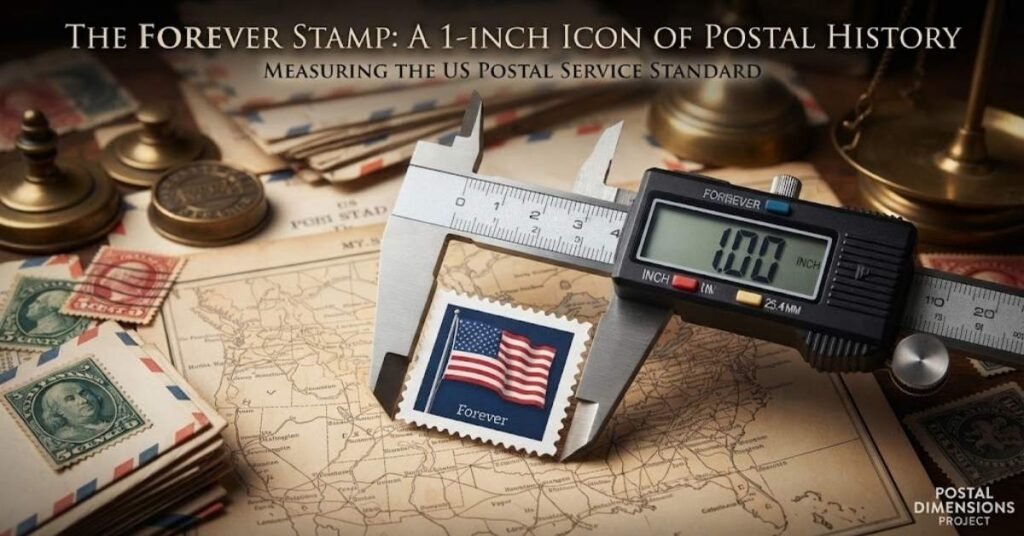
A Forever Stamp, the kind you slap on envelopes without thinking twice, measures roughly 1 inch wide and slightly taller in height.
The postal service actually relies on that consistent sizing for mail sorting machines. Odd-sized stamps can jam automated equipment, so postage stamp dimensions stay locked in year after year.
Next time you’re licking one (or peeling the sticker, more likely), notice how it practically matches a fingertip in width. That’s your 1-inch reference hiding in plain sight.
SD Memory Card
Believe it or not, a standard SD card is about 32 millimeters wide, but the shorter side, the one you slide into a card reader, measures close to 1 inch.
Photographers swap these tiny memory card slivers in and out of cameras constantly. If you’ve ever fumbled one between your fingers, you already know how small and precise 1 inch can feel.
Check the short edge of your camera memory card next time you’re backing up photos. It’s a surprisingly good desk-side comparison.
Shooter Marble
A shooter marble, the bigger one used to knock smaller marbles out of a ring in the classic marble game, typically measures right around 1 inch across.
Regular playing marbles run smaller, closer to half an inch, which is exactly why the shooter stands out visually. That size difference is built into the rules on purpose.
If you’ve got an old bag of glass marble pieces from childhood tucked in a drawer, dig it out. It’s a nostalgic and genuinely accurate size comparison tool.
A 1-Inch Wood Screw
In hardware stores, a 1-inch wood screw is one of the most common lengths on the shelf, used constantly in cabinet work, trim work, and general framing jobs.
That length gets measured from the tip to where the head sits flush against the surface, not including any extra length the screw head adds on top.
Builders and weekend DIYers alike reach for this size so often that it’s become a kind of unspoken 1 inch reference in toolboxes everywhere.
Width of Masking Tape
Standard masking tape, the kind painters grab without thinking, comes in a tape width of exactly 1 inch as one of its most common sizes.
Painter’s tape follows the same sizing convention, which makes it easy to line up two rolls and instantly understand what an inch looks like stretched flat.
Next time you’re prepping a wall for paint, unroll a strip and hold it against something else on this list. It’s a surprisingly handy trick.
The Rings on a 1-Inch Binder
Office workers know this one well. A 1-inch binder holds roughly 200 sheets of paper, thanks to binder rings that open exactly 1 inch wide.
That capacity matters when you’re organizing reports, school notes, or client files. Ring binder manufacturers stick to these sizes because they map cleanly to how much paper actually fits.
If you’ve got one sitting on a shelf, open it up. Measuring the gap between the rings gives you a clean, honest 1 inch every time.
Inch-Wide Ribbon
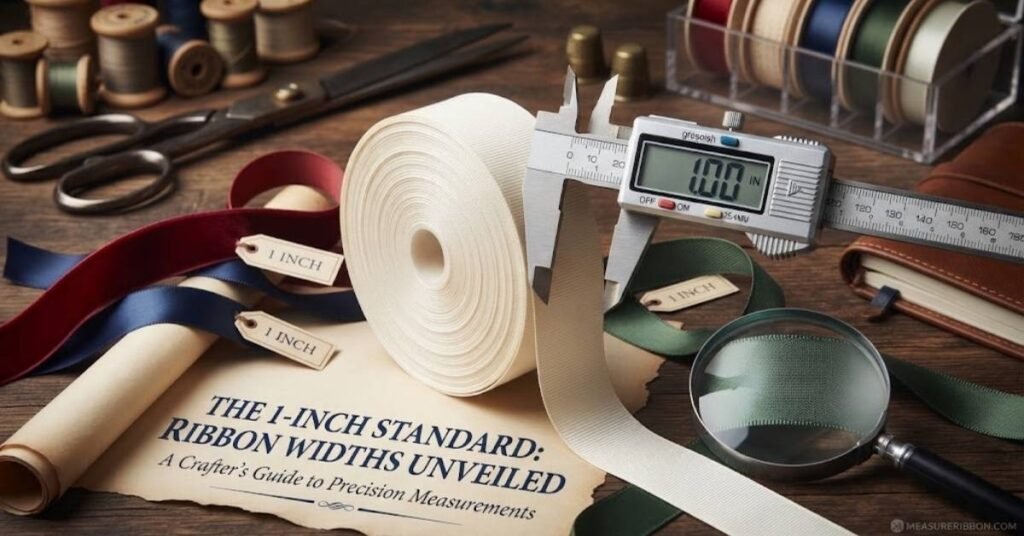
Walk into any fabric store and you’ll spot rolls of inch-wide ribbon stacked next to narrower and wider options.
This width shows up constantly in craft ribbon and gift ribbon projects because it’s wide enough to look substantial but narrow enough to tie a clean bow.
Grab a spool next time you’re wrapping a gift. Unspooling even a few inches gives you a flexible, bendable version of the measurement you can wrap around anything.
Tip of Your Index Finger
Here’s one that’s always with you. The width of an adult index finger, roughly from the first knuckle to the tip, measures close to 1 inch for most people.
It’s not exact, since hand measurement varies by person, but it’s close enough that carpenters and crafters use it constantly as an emergency 1-inch reference.
Try it yourself. Line your fingertip up against a ruler and see how close you land. It’s one of the handiest body measurement tricks around.
1 Inch of Hair
If you’ve ever asked a stylist to “just trim a little,” you’ve dealt with this measurement without realizing it. 1 inch of hair is the average amount hair grows in about one month.
That hair growth rate isn’t universal, some people grow faster, some slower, but it’s the number most stylists and dermatologists quote when talking timelines for a haircut.
Next time you’re deciding how long to wait between trims, remember this. A month usually buys you 1 inch of hair, give or take.
A Plump Grape
A plump grape, the kind you’d actually want to eat instead of the shriveled ones at the bottom of the bag, measures close to 1 inch across at its widest point.
This makes grapes a genuinely useful fruit size comparison tool, especially for anyone trying to describe portion sizes or produce dimensions without a scale handy.
Next time you’re at the grocery store, pick one up and really look at it. It’s a tastier size estimation trick than most.
A Cocktail Ice Cube
Bartenders take ice cube size seriously, and the classic cocktail ice cube used in whiskey glasses measures close to 1 inch on each side.
That size isn’t just for looks. A larger cube melts slower, which means less drink dilution over time, something any good bartender will tell you without hesitation.
Next time you’re mixing a drink at home, compare your ice tray cubes to this size. You might notice why your cocktails water down faster than the ones at a bar.
A Small Padlock
A small padlock, the kind used on gym lockers or duffel bags, typically measures close to 1 inch in width across the body.
You’ll spot this size constantly in gym locker settings and travel gear, since it’s compact enough to carry but sturdy enough to actually work as security.
Check the lock width on your own padlock next time you’re packing a bag. Odds are decent it lands right around this familiar number.
How to Spot 1 Inch on a Ruler
Reading a ruler correctly trips up more people than you’d expect, especially once the tiny lines between numbers show up.
Every full inch gets marked with the longest line, and the numbers next to them count up cleanly. Between each of those, you’ll find a half inch mark, then a quarter inch, then an eighth inch, and finally the tiniest sixteenth inch lines packed close together.
Those inch marks get shorter as the fractions get smaller, which is actually a helpful visual cue once you notice the pattern. Longer line means a bigger, rounder number; shorter line means you’re looking at a smaller slice like an eighth or sixteenth.
If you’re ever unsure, count the small lines between two full numbers. Sixteen small gaps between one inch and the next means you’re dealing with a standard fractional inch ruler, the kind found in almost every toolbox and sewing kit.
So What Is “1 Inch of Rain”?
Weather reports throw this phrase around constantly, but almost nobody stops to picture what it actually means.
1 inch of rain means that if the water couldn’t drain, soak in, or evaporate at all, it would sit exactly one inch deep across the entire area being measured. A rain gauge captures this directly, since it’s just a straight tube collecting water and marking the depth.
Here’s where it gets wild. One inch of rain falling over a single acre works out to roughly 27,150 gallons of water. Multiply that across a whole city during a bad storm, and it’s easy to see why even “just” an inch causes serious flooding in low-lying areas.
Per square foot, that same inch of rainfall equals about 0.623 gallons. It doesn’t sound like much until you remember how many square feet make up an entire yard, street, or neighborhood.
1 Inch on a Screen
Screens complicate things because screen measurement doesn’t always match a physical ruler unless you know the display size and resolution.
A monitor size or phone screen gets measured diagonally, corner to corner, not by the actual inch marks you’d draw on the glass. So a phone listed at 6 inches isn’t 6 inches wide, it’s 6 inches from one corner to the opposite one.
To find an actual physical inch on your screen, you’d need to know the pixel density. At 96 DPI, a common desktop standard, 96 screen pixels stretched out equal one real, physical inch when measured with a ruler against the glass.
1-Inch Objects in Specialized Fields
A few industries lean on this measurement more than most people realize, and it’s worth knowing where.
Commercial bottles rely on standardized cork diameter and neck sizing so that manufacturing lines don’t need custom parts for every single bottle shape. Postal machines depend on consistent postage stamp dimensions for the same reason, jammed equipment costs real money.
Camera accessories, especially anything built around memory card slots, stick to rigid sizing too. Even a millimeter off and your gear simply won’t fit, which is why 1-inch and near-inch measurements show up so often in manufacturing specs across totally unrelated industries.
Quick Reference: Objects at a Glance
Sometimes a fast list beats scrolling back through paragraphs. Here’s your cheat sheet.
- Hockey puck: 1 inch (height)
- Stack of 16-17 pennies: ~1 inch
- Wine cork: ~0.94 inch (diameter)
- US dollar coin: ~1.04 inch (diameter)
- Forever Stamp: ~1 inch (width)
- SD card: ~1 inch (short edge)
- Shooter marble: ~1 inch (diameter)
- Wood screw: 1 inch (length)
- Masking tape: 1 inch (width)
- Binder rings: 1 inch (opening)
- Craft ribbon: 1 inch (width)
- Index finger tip: ~1 inch (width)
- One month of hair growth: ~1 inch
- Plump grape: ~1 inch (diameter)
- Cocktail ice cube: 1 inch (each side)
- Small padlock: ~1 inch (width)
FAQs
How big is 1 inch compared to a centimeter?
One inch is bigger. It equals 2.54 centimeters, so anything measured in inches will always show a larger number in centimeters.
What household item is exactly 1 inch?
A hockey puck is exactly 1 inch tall, and a cocktail ice cube is usually cut to match that same size on each side.
How many pixels are in 1 inch?
It depends on your DPI conversion. At 72 DPI you get 72 pixels, at 96 DPI you get 96 pixels, and at 300 DPI (used for printing) you get 300 pixels.
Is 1 inch of rain a lot?
Yes, more than most people assume. Over one acre, it adds up to around 27,150 gallons, enough to cause real flooding if drainage can’t keep pace.
How can I measure 1 inch without a ruler?
Use your index finger tip, a stack of about 16 pennies, or a standard wine cork. None are perfectly exact, but all get you close enough for a quick visual estimate.