
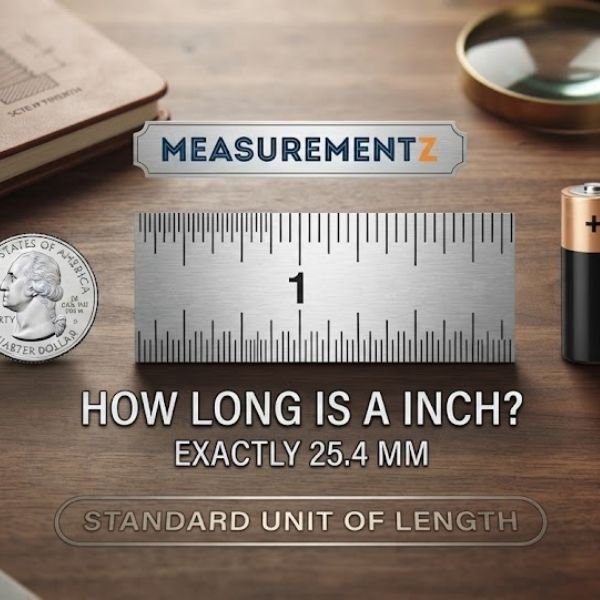

An inch is 2.54 centimeters, or 25.4 millimeters, if you want the exact number.
But numbers on a page don’t always stick in your head.
You need something you can picture, something you’ve probably touched today without even thinking about it.
That’s what this guide gives you. Ten everyday objects that are roughly one inch, plus a couple of comparison charts you can bookmark for later.
No ruler? No problem. By the end of this, you’ll be able to eyeball an inch almost anywhere.
Comparison Table: Inch vs Other Units
Let’s get the numbers out of the way first, since they’re handy for length conversion and measurement conversion chart lookups.
| Unit | Equivalent to 1 Inch |
| Centimeter | 2.54 cm |
| Millimeter | 25.4 mm |
| Foot | 0.083 ft |
| Yard | 0.0278 yd |
| Meter | 0.0254 m |
The imperial system and the metric system don’t always play nice together, and that’s exactly why this chart exists.
Keep it close if you’re switching between U.S. customary units and metric ones, especially while shopping online or following a recipe from another country.
Visual Comparison Table: What an Inch Looks Like
Numbers are one thing. Seeing an inch next to something familiar is another.
Here’s a visual measurement comparison using everyday objects and common household items you’ve probably got lying around right now.
| Object | Approximate Length |
| Standard paperclip | 1 inch |
| Width of a quarter coin | 0.955 inch |
| Thumb joint (tip to knuckle) | 1 inch |
| One side of a dice | 0.63 to 1 inch (varies) |
| Bottle cap diameter | 1.18 inches |
| USB flash drive connector | 0.5 to 0.6 inch |
| Adult finger width | 0.75 to 1 inch |
| Lego brick height (2×4 classic) | 0.38 inch (three stacked ≈ 1 inch) |
| Sewing pin head section | 0.5 to 1 inch |
| Small key width | 0.5 to 1 inch |
This table alone can save you a trip to grab a measuring tool every time you need a quick measurement estimate.
Now let’s break each one down, because context matters more than a bare number ever will.
1. A Standard Paperclip
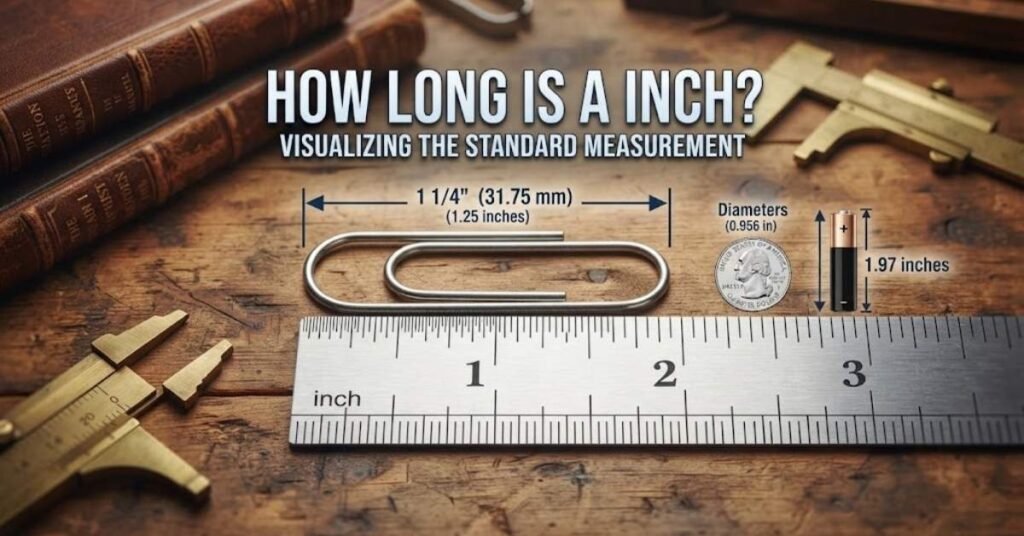
Grab one off your desk. Go on, we’ll wait.
A standard paperclip is almost exactly one inch long on its shorter axis, which makes it one of the most reliable one-inch reference objects you’ll ever find.
Office workers have been using this trick for years. Need to check if something’s roughly an inch and don’t have a ruler handy? Paperclip. Every time.
It’s not perfect science, but it’s close enough for most home measurement jobs, like checking if a picture frame nail will fit a gap or estimating object dimensions before you order parts online.
2. The Width of a Quarter Coin
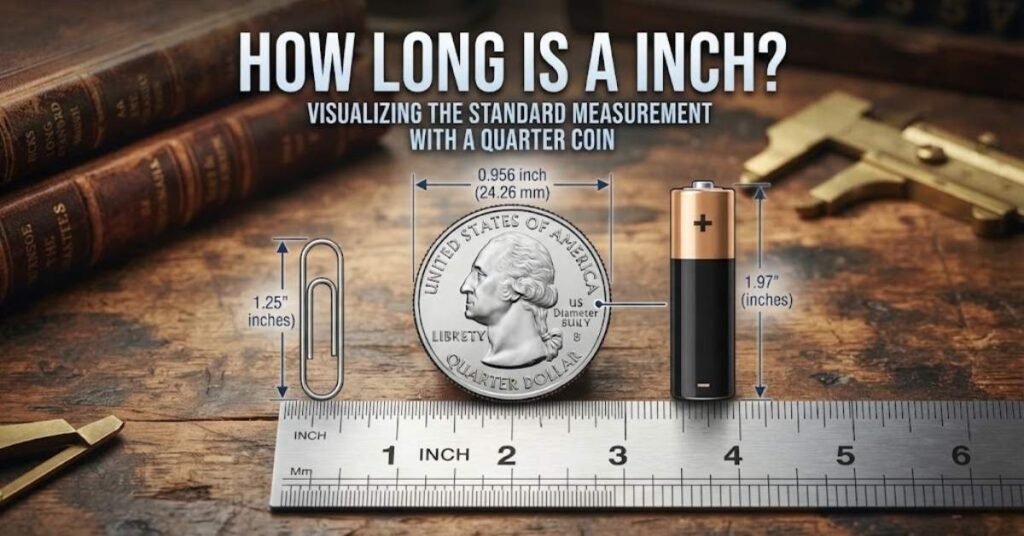
A U.S. quarter coin measures 0.955 inch across, which rounds to almost a full inch.
Coin measurement is another classic trick, mostly because coins are standardized and you’re probably carrying one right now.
Next time you’re trying to describe a scratch, a bug, or a stain to someone over the phone, just say “about the size of a quarter.” They’ll get it instantly. That’s the power of real-world measurement examples, they skip the math and go straight to the picture in someone’s head.
3. The Length of a Thumb Joint
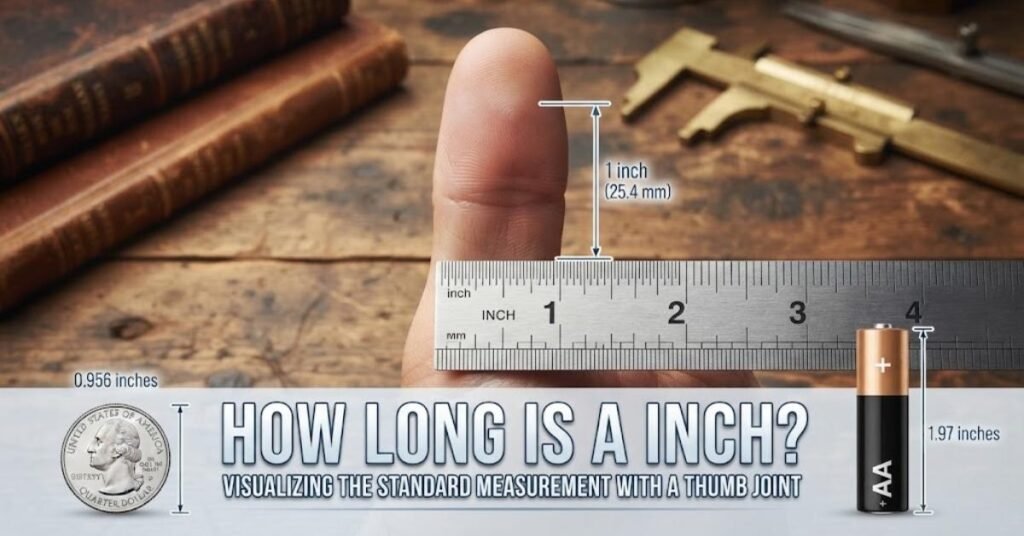
Here’s a fun one your grandparents probably used before rulers were common.
The distance from the tip of your adult thumb joint to the first knuckle is close to one inch for most adults. It’s called body-based measurement, and carpenters, tailors, and cooks have leaned on it for centuries.
Obviously, hand size varies from person to person, so this isn’t lab-precise. But in a pinch, literally, your thumb is a built-in ruler you’ll never forget at home.
4. A Dice (One Side Length)
Standard board game dice usually measure between 0.63 and 1 inch per side, depending on the game and manufacturer.
A six-sided dice used in classic games like Monopoly or Yahtzee tends to sit closer to the smaller end, while casino-style dice run bigger, sometimes hitting a full inch.
If you’ve got a cube-shaped object lying around, whether it’s a dice from board games or a small storage cube, it’s worth comparing. You’ll be surprised how often “about an inch” shows up in game pieces.
5. The Diameter of a Bottle Cap
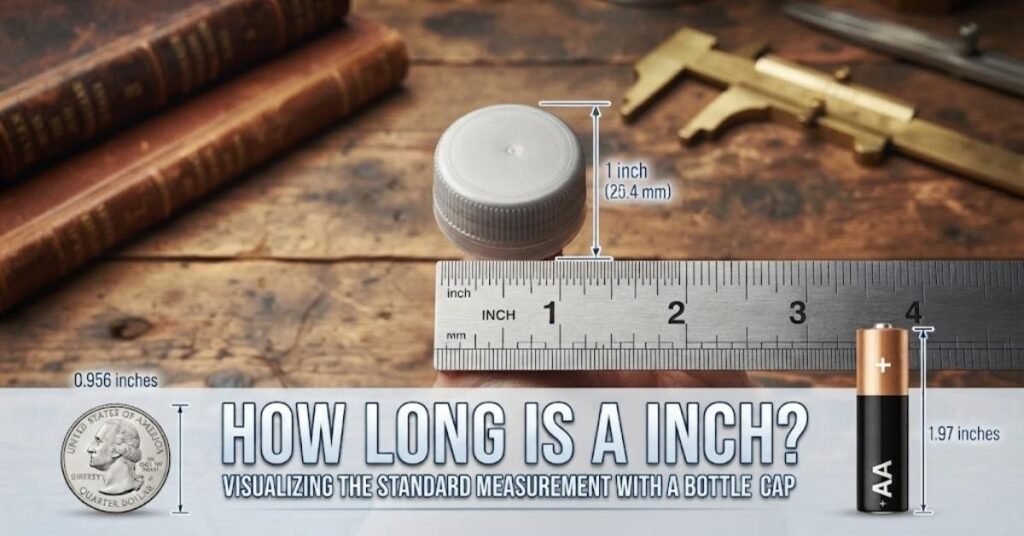
A standard plastic bottle cap measures around 1.18 inches across, which is a little over an inch but close enough to use as a mental reference.
Bottle cap diameter is one of those measurements you don’t think about until you need it, like when you’re trying to patch a small hole or figure out if a coaster will actually cover your cup ring.
This circular measurement trick works well because bottle caps are everywhere. Kitchen, car, garage, you’re never far from one.
6. A USB Flash Drive Connector
The metal part of a USB flash drive, specifically the USB Type-A connector, measures roughly 0.5 to 0.6 inch in width.
This one matters more than people realize, especially with electronic accessories and computer accessories where a few millimeters off can mean a port that just won’t fit.
Technology dimensions rely heavily on precision manufacturing, so manufacturers keep these measurements consistent across brands. That’s actually good news for you. It means one USB stick gives you a solid mental reference for future tech purchases too.
7. The Width of an Adult Finger
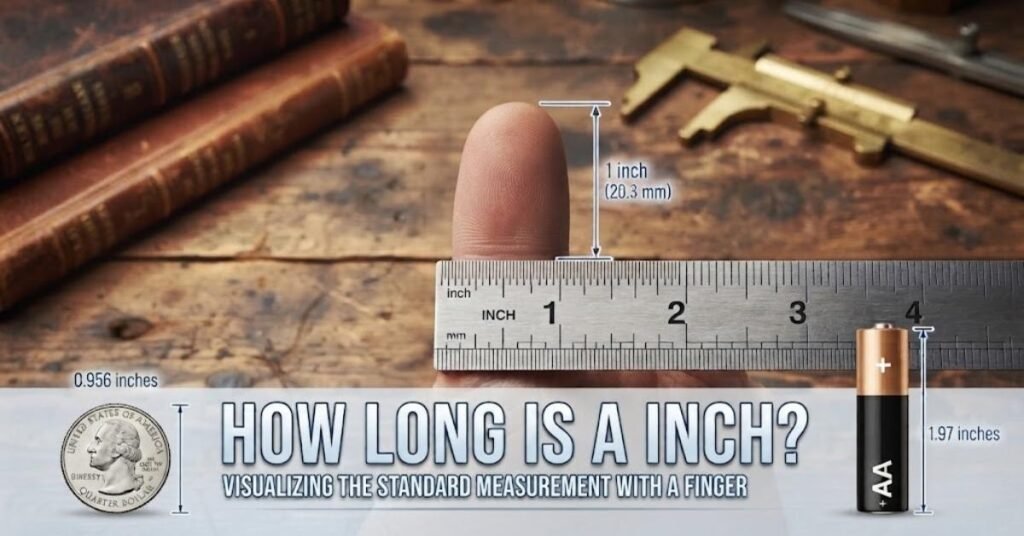
An adult finger width typically falls between 0.75 and 1 inch, depending on which finger and whose hand we’re talking about.
Finger width is another body-based shortcut people use constantly without realizing it. Ever heard someone say “just a finger’s width” when describing a gap or a pour of whiskey? Now you know where that phrase comes from.
It’s not exact, but it’s close enough for casual estimates around the house, garden, or workshop.
8. A Lego Brick Height
A classic 2×4 Lego brick stands about 0.38 inch tall on its own.
Stack three of them and you’re right around one inch. Lego brick height and other Lego measurements are famously consistent, which is exactly why the toy has worked the same way since the 1950s.
If you’ve got kids, or you’re still secretly building sets as an adult, no judgment here, this is a genuinely fun way to visualize small measurements without pulling out a tape measure.
9. The Length of a Sewing Pin Head Section
For anyone into fabric crafts or DIY projects, this one’s practical.
The sewing pin head section, meaning the colored ball plus a bit of the shaft below it, usually measures somewhere between 0.5 and 1 inch depending on the pin style.
Sewing tools like these are designed with small, exact measurements in mind, since even a slight size difference can affect how fabric holds together. Crafters often eyeball this without a second thought, because repetition builds instinct.
10. A Small Key Width
Your average house key or drawer key measures somewhere between 0.5 and 1 inch across the widest part.
Standard dimensions for keys vary by manufacturer and lock type, but this range holds up across most modern small key designs you’ll find in a junk drawer or on a keyring right now.
Next time you’re comparing something small, like a screw or a bolt, pull out your keys instead of searching for a ruler. It’s already in your pocket.
Why Learning to Estimate an Inch Actually Matters
This isn’t just trivia for a rainy afternoon.
Online shopping measurements trip people up constantly. You order a phone case, a picture frame, or a piece of furniture hardware, and the listing says “1 inch,” but you have zero context for what that actually means until it shows up at your door.
Knowing these everyday measuring techniques means you can glance at a product photo, compare it to a paperclip or a quarter in your head, and know whether it’ll actually work before you click buy.
Craft projects and construction measurements benefit too. Measurement accuracy matters when you’re cutting wood, hanging shelves, or hemming pants, and having a mental library of length approximation tricks saves you from constant back-and-forth trips to grab a tape measure.
How to Estimate an Inch Without a Ruler
Here’s a quick rundown you can actually use:
- Paperclip method: Compare the object to a standard paperclip’s short side.
- Coin method: Line it up against a quarter’s width.
- Thumb method: Use the tip-to-knuckle length on your thumb.
- Key method: Pull out your keys and compare widths.
- Stacked bricks: Three Lego bricks stacked equals roughly an inch.
None of these replace an actual measuring tool when precise measurement really counts, like in construction or engineering work. But for quick, casual size estimation methods, they’ll get you close enough almost every time.
Common Mistakes People Make When Estimating Length
A lot of people assume “close enough” always works, and sometimes it really doesn’t.
Ordering hardware, cables, or small parts based on a rough guess can backfire fast, especially when a length estimation is off by even a quarter inch. That’s the difference between a screw that fits and one that strips the hole.
Another mistake? Assuming every “same” object is identical. Quarters, dice, and even Lego bricks can have tiny manufacturing variations. They’re reliable references, not laboratory-grade tools, so treat them as a starting point, not gospel.
Final Thoughts
An inch doesn’t have to feel abstract anymore.
You’ve now got ten solid, real-world objects, a paperclip, a quarter, your own thumb, a bottle cap, and more, that you can picture instantly whenever someone throws a measurement at you.
Next time you’re guessing at object dimensions, distance measurement, or trying to figure out if something will fit before you buy it, you won’t need to search “how long is an inch” again. You’ll already know.
Got a favorite trick for estimating small objects that we didn’t cover? Drop it in the comments. We’d love to add it to the list.
Frequently Asked Questions
How long is an inch compared to a centimeter?
One inch equals 2.54 centimeters. So anything measuring 1 inch is a little over two and a half centimeters long.
What household item is exactly one inch?
A standard paperclip’s short side is one of the closest household matches to a true one-inch length.
Is a quarter exactly one inch wide?
Not quite. A U.S. quarter measures 0.955 inch across, just slightly under a full inch.
How can I measure an inch without a ruler?
Use your thumb joint, a paperclip, a quarter, or a house key as quick visual references for a quick measurement estimate.
Why do Americans still use inches instead of centimeters?
The United States continues to use the imperial system and U.S. customary units for everyday measurements, while most of the world relies on the metric system.
Is one inch bigger than one centimeter?Yes. One inch is significantly longer than one centimeter, roughly two and a half times bigger.